Bernedoodle Colors
Tri-Color Bernedoodles
Tri-Color Bernedoodles available now, and everything about the color.
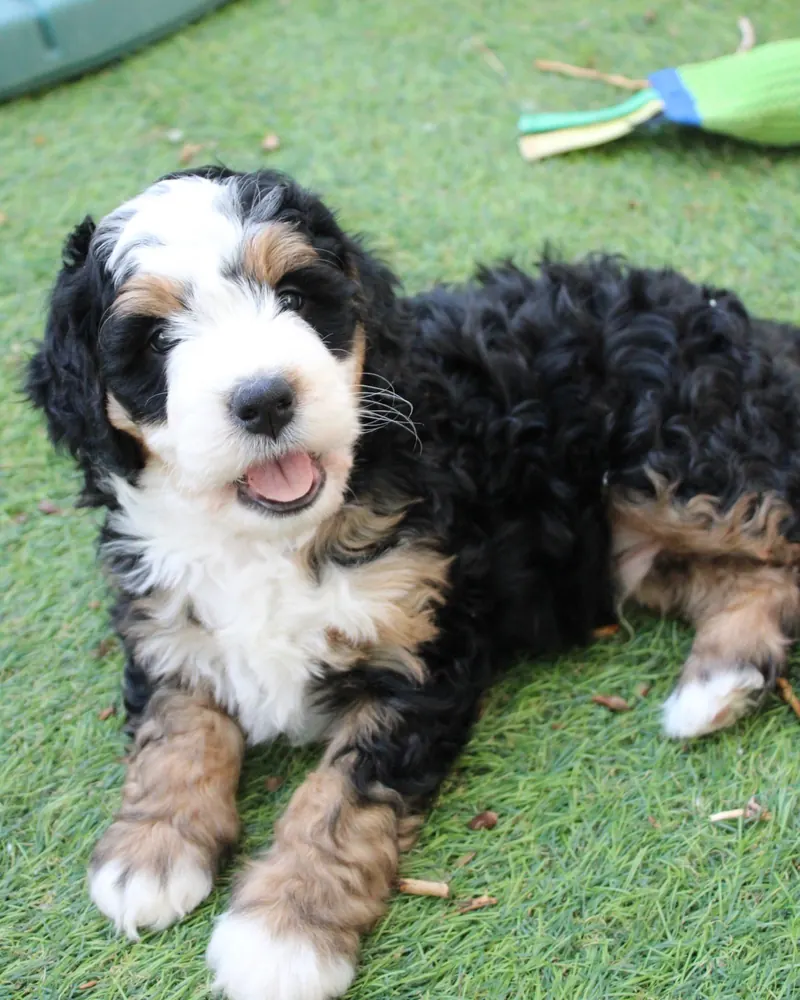
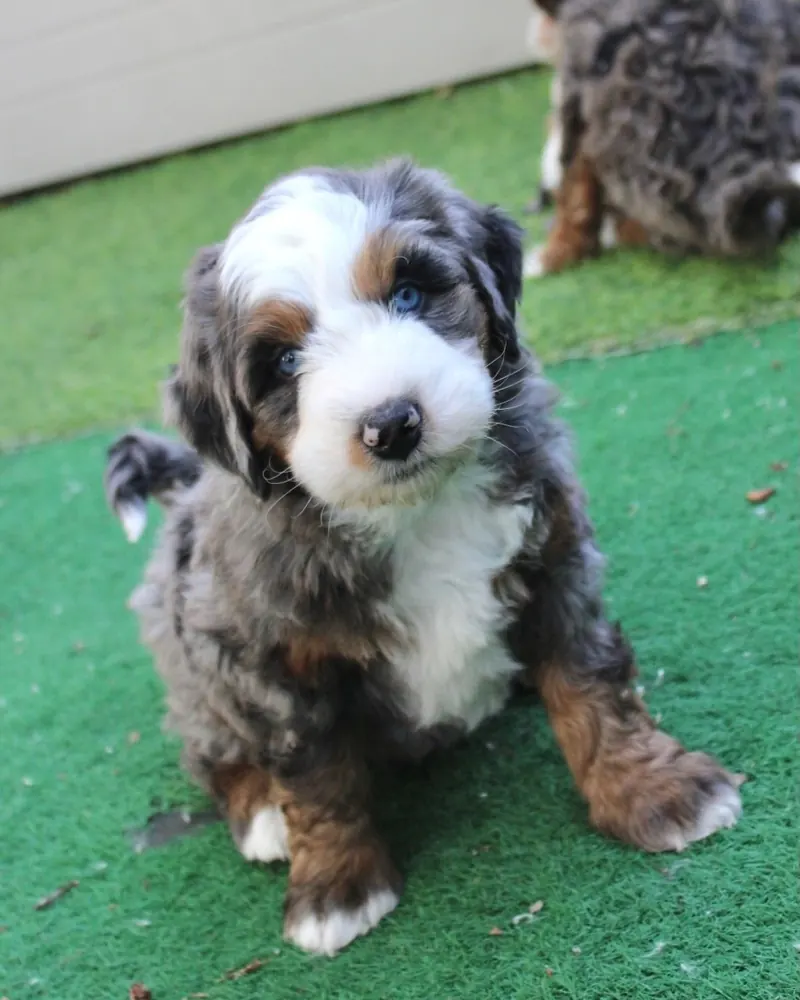
A tri-color Bernedoodle shows three colors at once: a dark base of black or chocolate, tan points on the eyebrows, cheeks, legs and under the tail, and white on the chest, paws or face. It is the pattern of the Bernese Mountain Dog side, and it is the coat most people picture when they imagine a Bernedoodle.
Underneath the three colors sit three separate bits of genetics, which is why no two tri-colors are quite alike. The sections below cover how the pattern forms, how it can change with age, and what to look for.
Tri-Color Bernedoodles Available Now
What is a tri-color Bernedoodle?
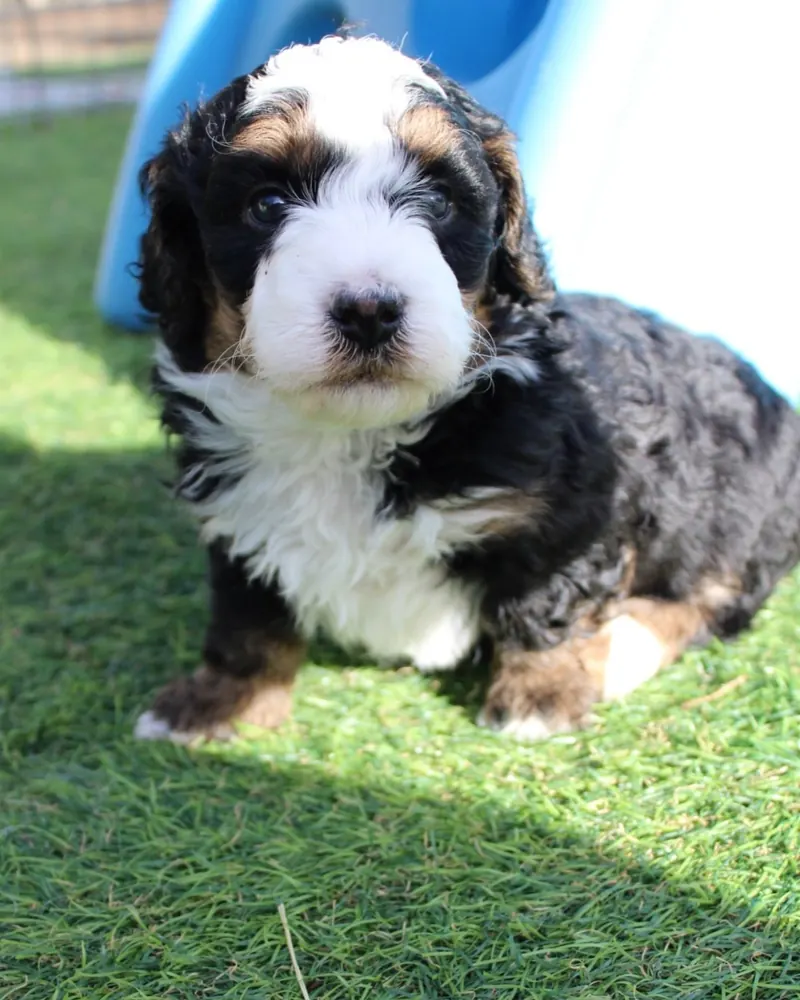
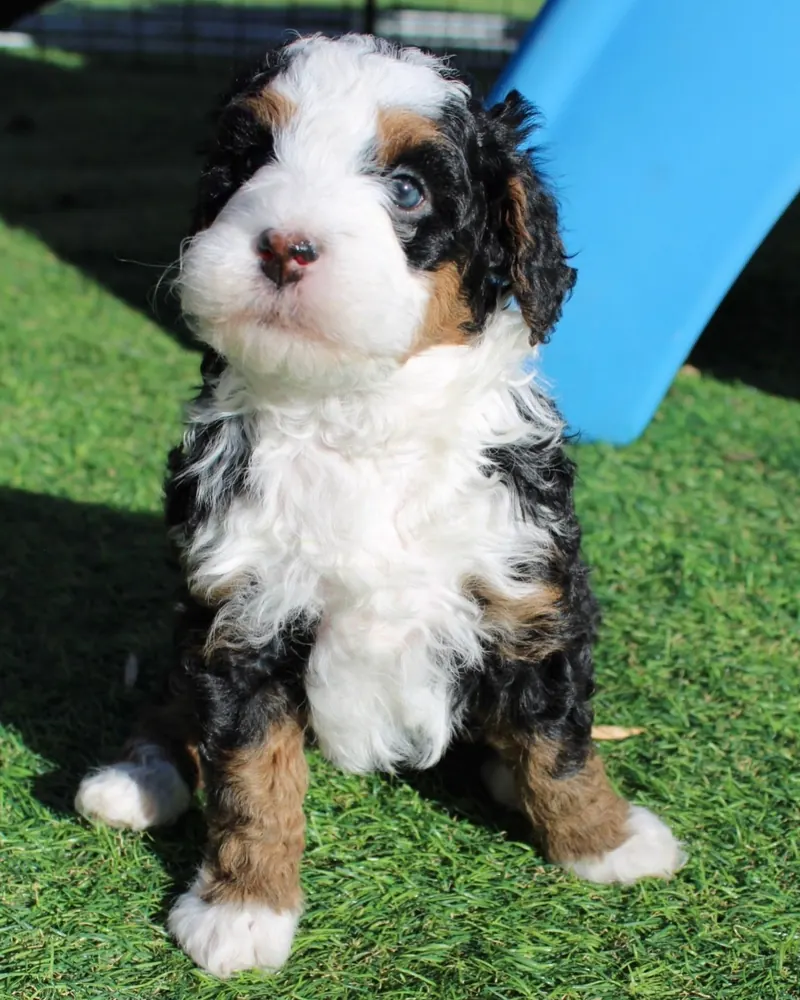
The name is literal. Three colors: black (or brown), tan, and white. The tan, often called rust on a Bernese, sits in set places: a spot over each eye, on the cheeks, along the lower legs and under the tail. White tends to land on the chest, the toes and sometimes in a blaze up the face.
Not every tri-color looks like a Bernese in a Poodle coat. Wavy and curly coats break the pattern up, and a haircut can hide or reveal the points. A close trim shows the layout clearly. A long, full coat softens it.
The layout is usually visible on a young puppy: a small spot above each eye, often called an eyebrow, and tan on the cheeks. Those eyebrow spots are the quickest check for a true tri-color, since a black dog with white but no tan is a different coat. See the black and white page for that one.
How does a tri-color Bernedoodle get its pattern?
Two things combine. The first is tan points, a pattern on the A locus of the dog genome. Embark, the canine genetics company, reports this as the at variant. It only shows when the dog does not carry a dominant black gene that overrides the pattern. The second is white spotting, which Embark tests on the S locus. One copy of the white spotting variant gives limited white, and two copies give a mostly white dog.
The base color is a third piece. Black is common, and a brown base gives a chocolate tri-color. Because a puppy needs the right pieces from each parent, the amount of white and the exact shape of the tan varies from puppy to puppy, even within a litter. Read about F1, F1b and multigen Bernedoodles for how generation affects what pups can inherit.
The practical point is that a tri-color needs the right mix from both parents, and a litter can hold several different coats.
Do tri-color Bernedoodles change color?
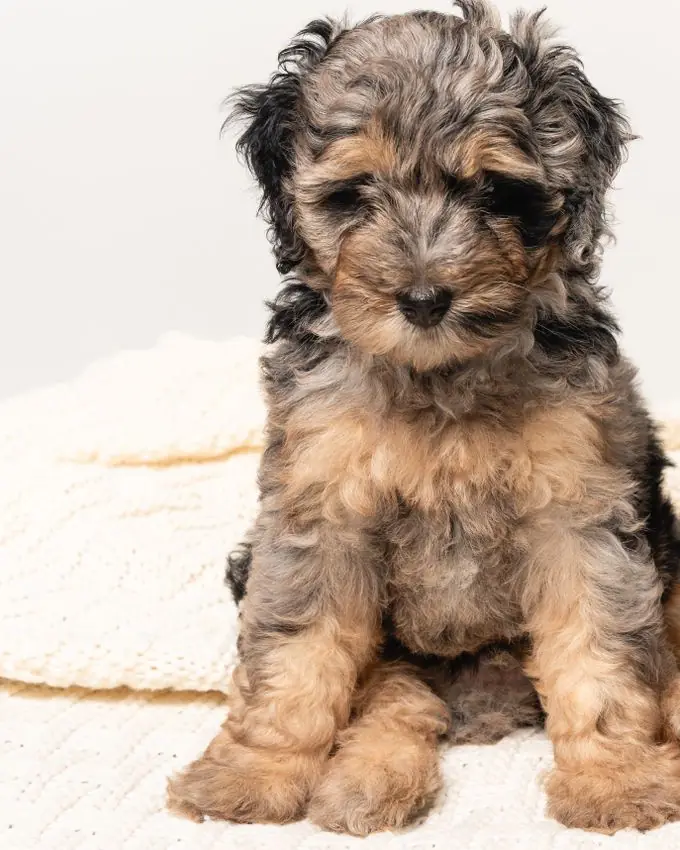
The layout stays, but shades can move. A black base may lighten toward gray or silver as the dog grows, which Poodle breeders call clearing. A chocolate base can lighten to a sandy beige. Tan points can pale or look more cream, and on some dogs they get harder to see against a lightened coat.
The gene most often blamed for progressive graying has not been identified with certainty, so no test tells you how a particular puppy will turn out. Photos of adult dogs from the same family are a rough guide to how a puppy may turn out, not a promise.
What does not shift is the white. A chest bib and white toes at eight weeks stay white, and they can look brighter as the dark coat around them lightens. A haircut changes how much of the pattern you see, so the grooming guide is worth a look before judging a pattern from a trimmed photo.
What about tri-color merle and chocolate tri-color?
Tri-color can sit on top of other colors. A chocolate tri-color has a brown base with tan and white. A tri-color merle has the three-color layout with a mottled merle effect across the dark areas. The merle page explains why merle needs special care in breeding.
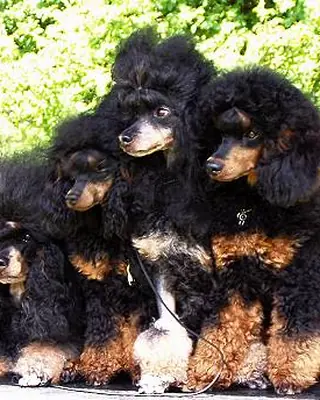
A dog with tan points and only a small patch of white sits between tri-color and phantom, and the phantom page covers that overlap.
How is tri-color different from phantom?
Both have tan points. The difference is white. A phantom has a solid body with tan points and little or no white. A tri-color has the same points plus white markings. Some dogs fall in between, with only a small white patch on the chest, and are called either one. The phantom page sets the two side by side.
Bernedoodles are a mixed breed with no registered color standard, so breeders use these words loosely. Look at the photos and ask what a breeder means by the term before relying on it.
Does tri-color affect health or temperament?
- No reliable evidence links the tri-color pattern to personality. Temperament follows breeding, early handling and training.
- The tan points and white spotting are not themselves a health problem.
- Very large areas of white, especially around the head and ears, have been linked to hearing loss in some breeds. This is a general observation across dogs, not a specific finding about Bernedoodles.
For the general picture, read the health guide and the temperament guide.
How big does a tri-color Bernedoodle get?
Color has no say in size. A tri-color can be a micro, mini, standard or anything between, depending on the parents. The full grown size chart lists the ranges, and the mini Bernedoodle page covers the mid-sized option.
In a smaller dog the same pattern is simply compressed, so the eyebrow spots and white toes sit closer together.
Where can you see tri-color puppies?
Puppies change from litter to litter. To see what is ready now from KK Doodles, open the available puppies page. To compare against other colors, return to the Bernedoodle colors hub.
Tri-Color Bernedoodle Questions
01Is a tri-color Bernedoodle the same as a Bernese Mountain Dog?
No. It borrows the Bernese pattern of black, rust and white, but the coat is wavy or curly like a Poodle's and the dog is a mix of both breeds.
02Can a tri-color Bernedoodle lose its markings?
The layout does not disappear, but the shades can lighten. Tan points may look paler and a black base may turn gray or silver. How much varies by dog.
03How do you breed a tri-color Bernedoodle?
The puppy needs the tan point pattern and white spotting from its parents. Because both are inherited in set ways, the outcome in any one litter cannot be promised, and colors from the pairing can differ.
04Is tricolor spelled with a hyphen?
Both forms are common. Tri-color, tricolor and tri colored all describe the same pattern.
05Do tri-color Bernedoodles shed less?
Coat color does not decide shedding. Coat type does, and the shedding guide explains it.
06Do tri-color puppies keep the same pattern as adults?
The layout of tan and white stays where it started. Shades move: black can lighten toward gray, and a haircut changes how much of the pattern shows. Wavy coats also blur the edges.
The Other Bernedoodle Colors
When You Are Ready
Would You Like a Tri-Color Bernedoodle?
Send us a message with the puppy's name, or ask us anything first.
Phantom poodles photo: Andrea Brendemühl, Wikimedia Commons, CC BY 3.0, cropped.
