
Sable Bernedoodles
What the color is, how it is bred, and how it can change as a puppy grows.
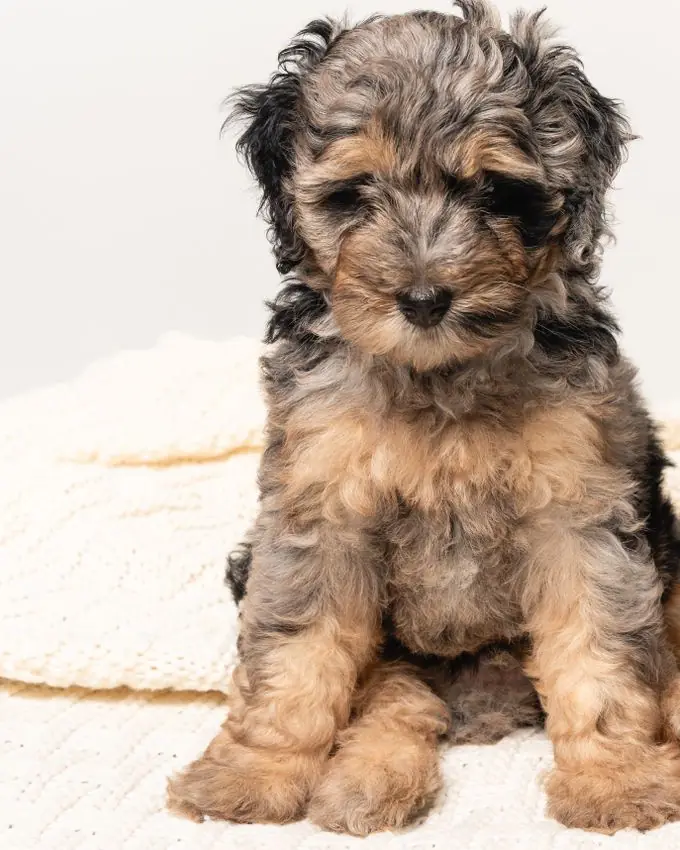
A sable Bernedoodle has a coat where each hair is shaded, lighter near the skin and darker at the tip. Over a body it reads as a warm tan, red or fawn base with a dark overlay, most often across the back, ears and muzzle.
Sable is one of the less obvious Bernedoodle colors, since the Bernese Mountain Dog's own coat is black, white and rust rather than shaded. It can also look quite different at eight weeks, eight months and two years.
Looking for a Puppy? See the Other Colors
There are no sable Bernedoodle puppies listed right now. See the tri-color and merle puppies, or tell us what you are hoping for.
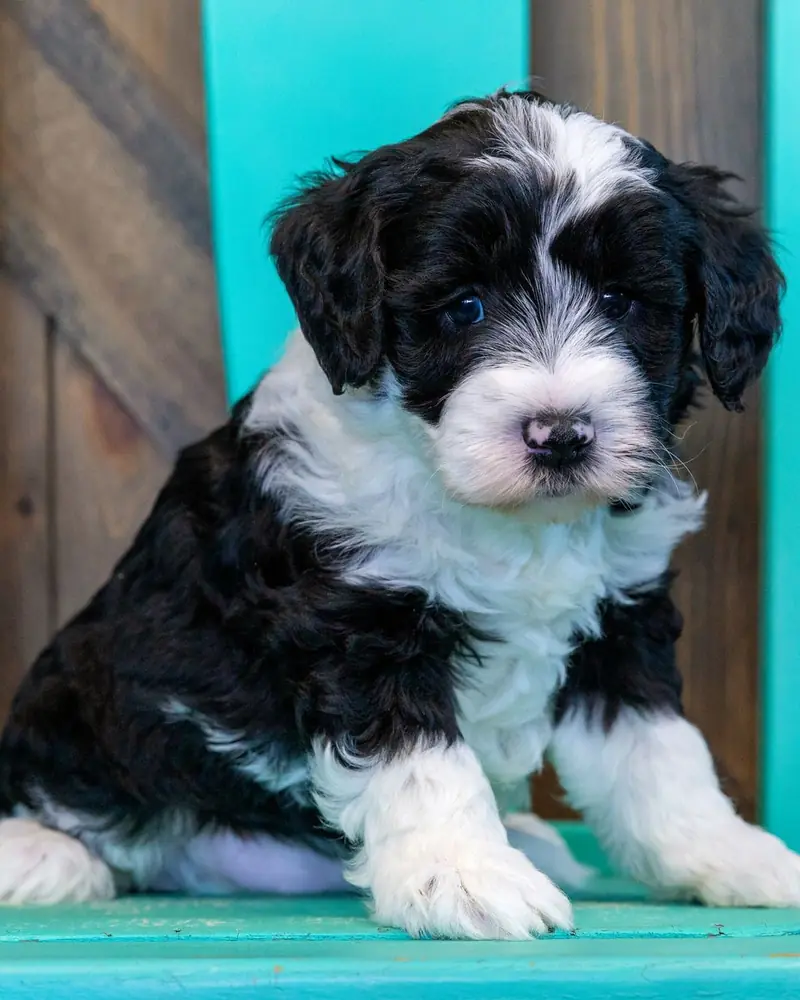
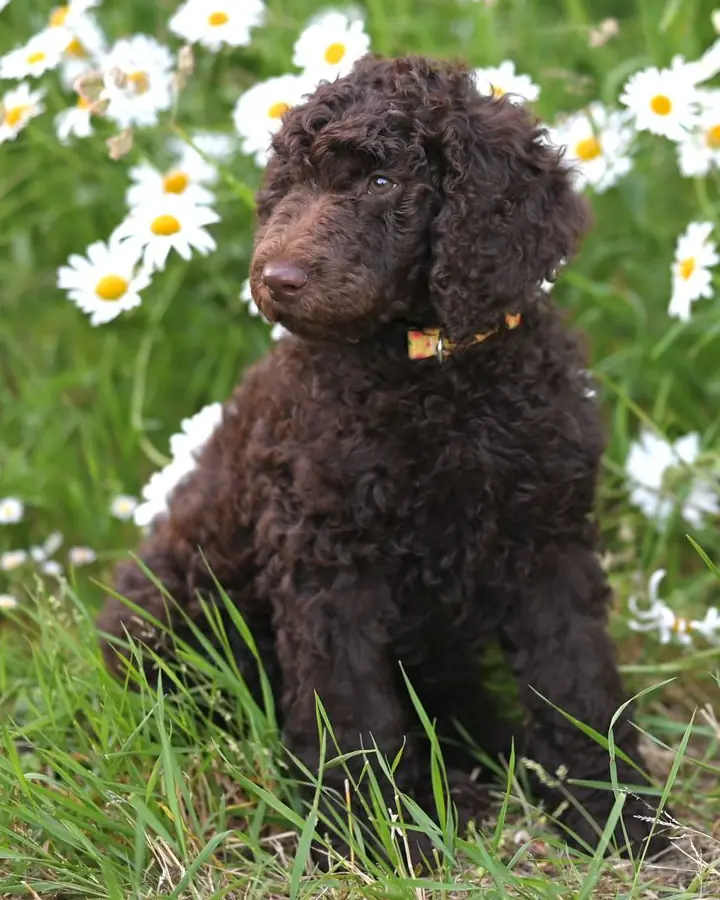
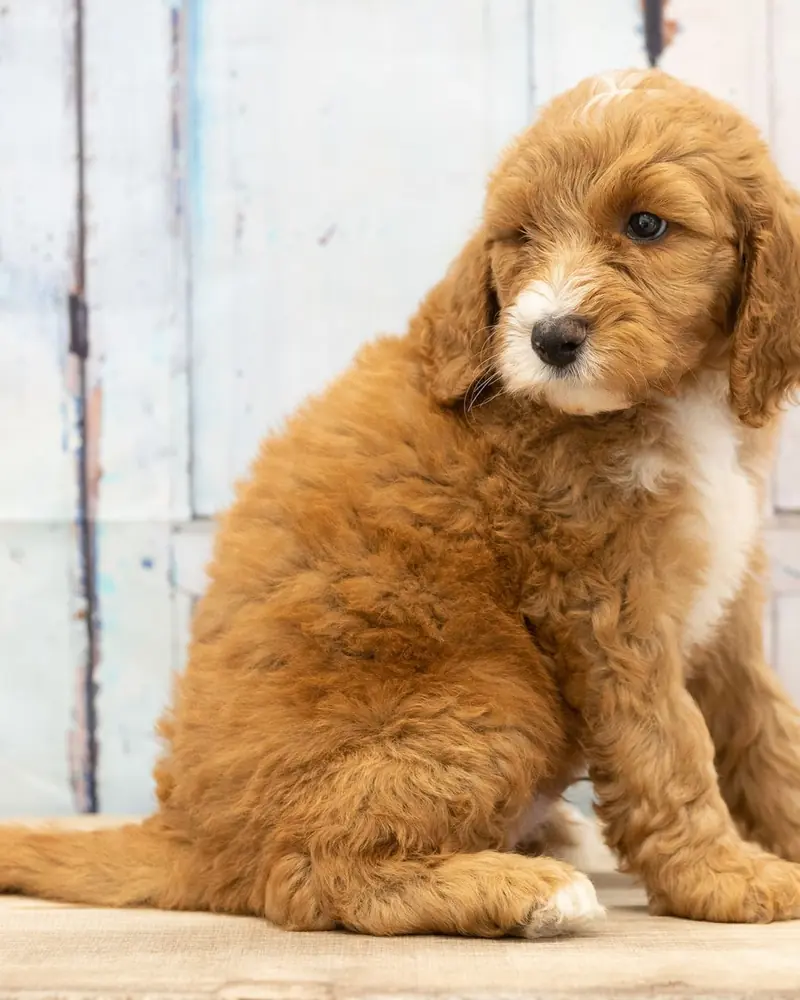
What does a sable Bernedoodle look like?
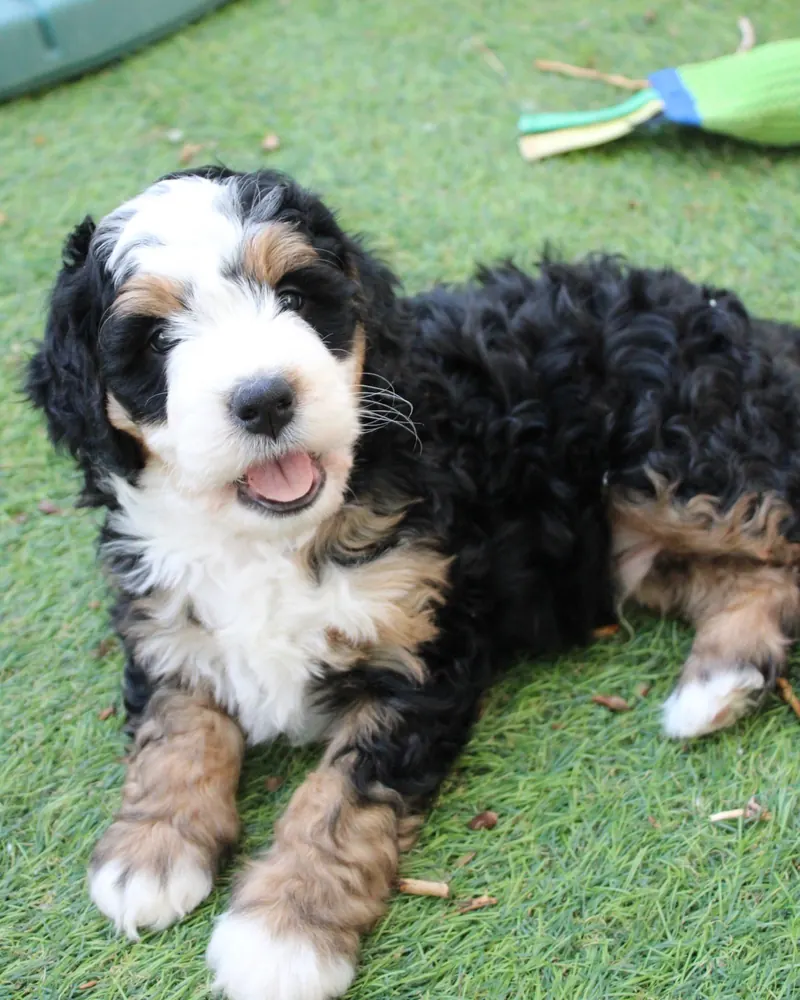
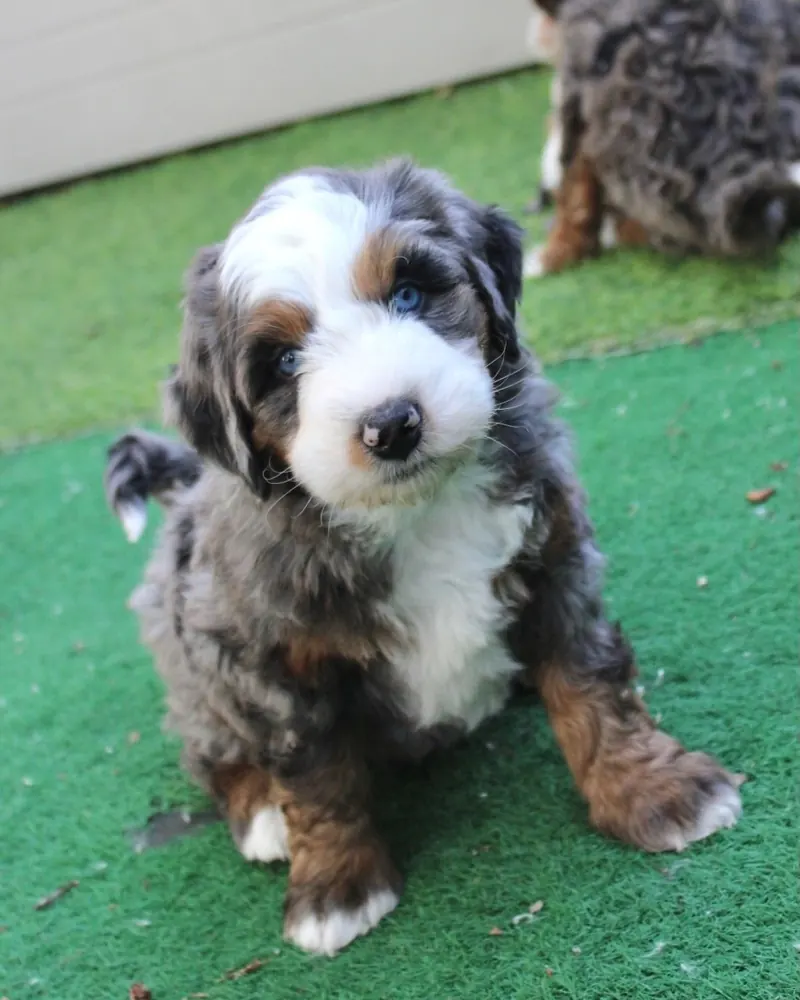
The effect is a shadow. Puppies can look dark brown or nearly black on the back and ears, with lighter fur at the cheeks, chest and legs. Sable also takes different forms: some dogs are lightly shaded, others carry heavy dark tipping. It can appear on its own or with white, so you may see sable and white mentioned together.
Wavy and curly coats add to the effect, since the curl displays the lighter roots against the darker tips.
Look at the places where hair is shortest or thinnest. The ears, the muzzle and the line down the spine are where dark tipping gathers, and the legs, chest and underside show the base most plainly. A heavily tipped sable can look almost black from above and warm tan from below, which can surprise new owners in different light.
Photos help most when they are taken in daylight, because indoor lighting flattens the shading. A photo taken outside shows the shading best.
How is sable produced?
Sable is one of the variants at the A locus, the same gene that holds tan points. Embark names the sable variant ay and describes it as dominant over the others. Like tan points, it can only show when the dog does not carry a dominant black gene, which hides the pattern.
Embark adds that some breeders see this ranking behave differently by breed. Dog genetics has also moved around the names of these variants over the years, so published terms differ from site to site.
In plain terms, the gene decides whether the coat is made of shaded hairs or of one color with markings, and other genes then set how dark the shading is. Embark describes the result as clear or tipped sable. A clear sable has no dark tipping and looks like a plain fawn, and a tipped sable has plenty.
A DNA test for the A locus tells you which versions of the gene a dog carries, including whether it holds a sable copy. The coat alone cannot always say, since a dominant black gene can hide the whole pattern.
Do sable Bernedoodles change color?
It can. The dark tips on a sable puppy may fade as the adult coat comes in, and the dog can end up a lighter shade of tan, red or cream. On some dogs the dark ears and muzzle stay while the back lightens.
A puppy photo is therefore a snapshot. If you like the dark look, remember it may not last. For more on how shades move, see the colors hub.
Part of the change comes from the coat itself. Puppy fluff is replaced by a longer, thicker adult coat, so the shift is not only fading. Grooming plays a part too: a clip removes the longest, darkest-tipped hair, and a dog that looks dark in full coat can look lighter after a short trim. The grooming guide covers the cuts.
How is sable different from red or apricot?
A red or apricot dog is red because it carries two copies of a recessive gene that blocks black pigment entirely. A sable has the ability to make black, and the black appears as tipping. In short, red has no dark hairs and sable does. After the tips fade, the two can look very much alike. The red page covers the other route.
A quick test is to part the coat. A sable shows dark ends on lighter hairs, while a red dog has hair of one red shade from root to tip.
Can a sable Bernedoodle be merle or tri-color?
The names get combined online, such as sable merle and sable tri-color. Merle works on dark pigment, and a mostly pale sable may show little of it, so a merle gene can sit hidden. That makes DNA testing worthwhile before pairing a merle with anything. Read the merle page for why.
A sable merle is hard to read by eye, so only a DNA test can confirm it.
Does sable affect health or temperament?
No research links sable to health problems or to personality. Both are shaped by breeding, early handling and care. See common Bernedoodle health problems for the issues that matter whatever the color.
The one color-linked health concern in this family is merle, and it applies only when merle is present.
How big do sable Bernedoodles get?
Color is independent of size. Sable comes in every size the full grown chart lists.
Coat length changes how sable reads at any size. A short-coated or closely clipped sable looks different from the same dog in full coat, because the length of the hair shows or hides the contrast between root and tip. The mini Bernedoodle page and the standard page cover size.
Where can you see sable puppies?
Current litters from KK Doodles are on the available puppies page.
Sable Bernedoodle Questions
01What is a sable Bernedoodle?
A Bernedoodle with shaded hairs, lighter at the root and darker at the tip, over a tan, red or fawn base.
02Do sable Bernedoodles fade?
The dark tipping can fade as the adult coat comes in, leaving a lighter tone. How much varies by dog.
03Is sable the same as brindle?
No. Brindle is a striped pattern. Its genetics are separate from sable's.
04Is sable the same as red?
No. A red dog cannot make black hairs, while a sable can, and shows them as tipping.
05Can a sable puppy look black at first?
Yes. Heavy dark tipping can make a young sable look dark brown or nearly black on the back and ears, with the lighter base showing on the cheeks, chest and legs. The tipping may fade.
06Can sable come with white markings?
Yes. Sable can appear with white on the chest, paws or face, and is sometimes called sable and white.
The Other Bernedoodle Colors
Hoping for a Sable Bernedoodle?
Tell us what you are looking for, and ask about the puppies available now.
Phantom poodles photo: Andrea Brendemühl, Wikimedia Commons, CC BY 3.0, cropped.
