
Black and White Bernedoodles
What the color is, how it is bred, and how it can change as a puppy grows.
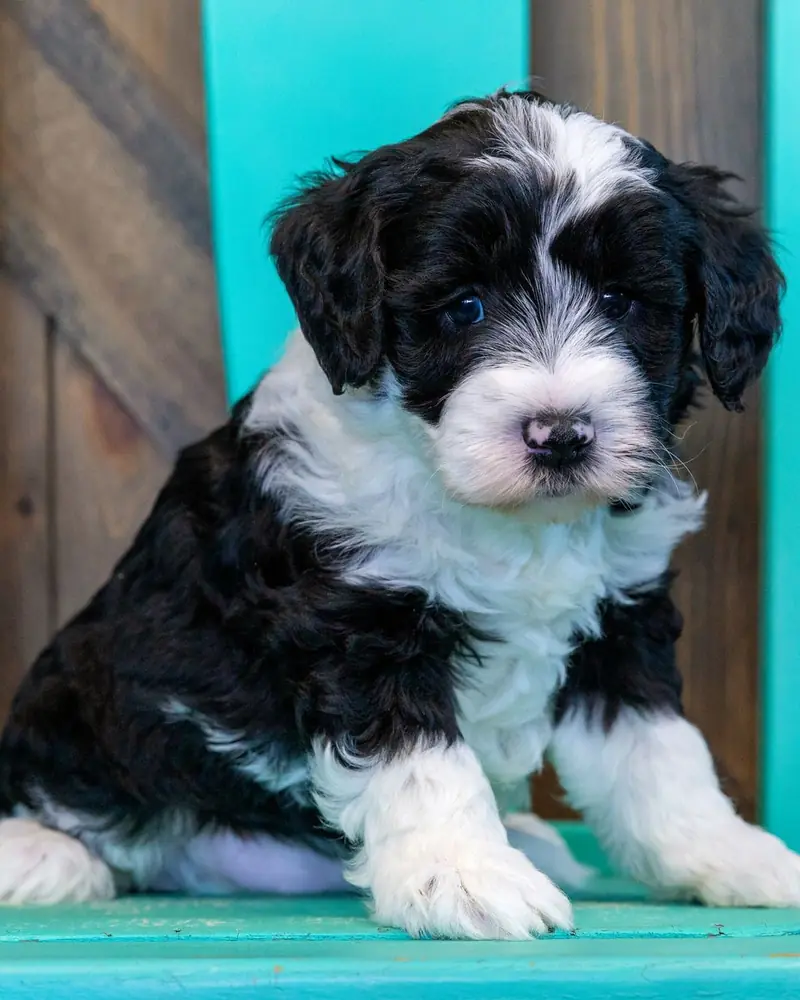
A black and white Bernedoodle is a black dog with white on the chest, paws, muzzle or face. When the white sits in a tidy bib and four socks, the look is called a tuxedo. When the white spreads across more of the body, it is a parti. Both are popular, and both are easy to spot in a crowd.
This page covers how the white forms, how the pattern differs from tri-color and red tuxedo, and what happens to the black as the coat grows in and is clipped. It also answers the hearing question that comes up with heavily white dogs.
Looking for a Puppy? See the Other Colors
There are no black and white Bernedoodle puppies listed right now. See the tri-color and merle puppies, or tell us what you are hoping for.
What is a black and white Bernedoodle?
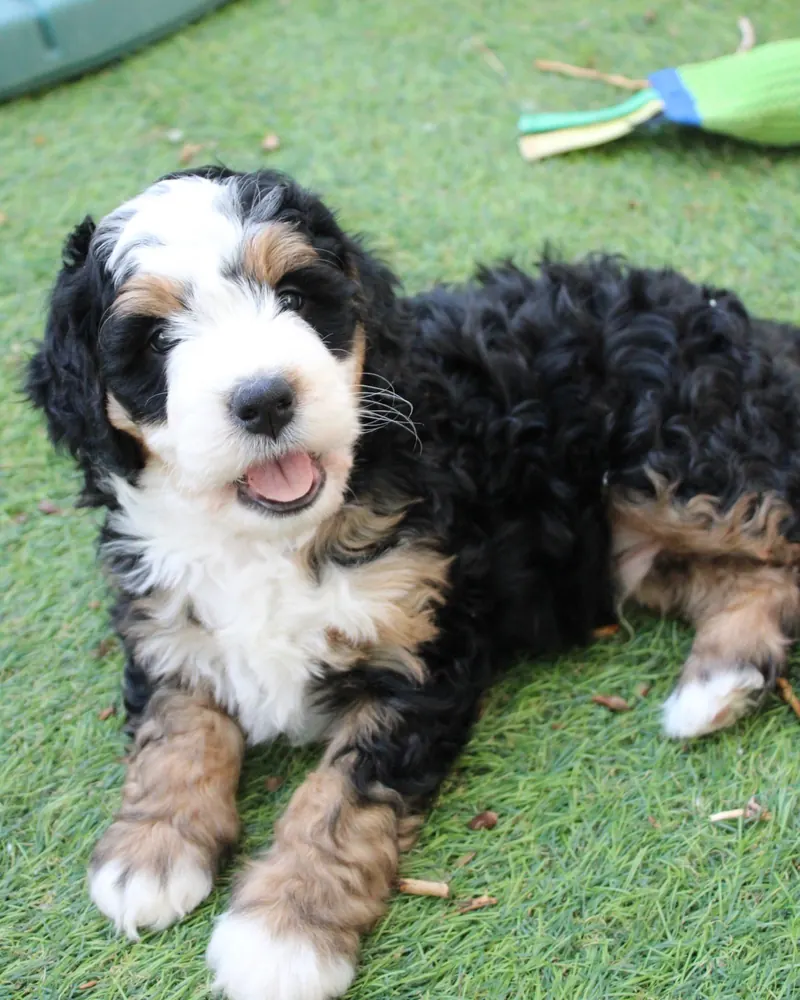
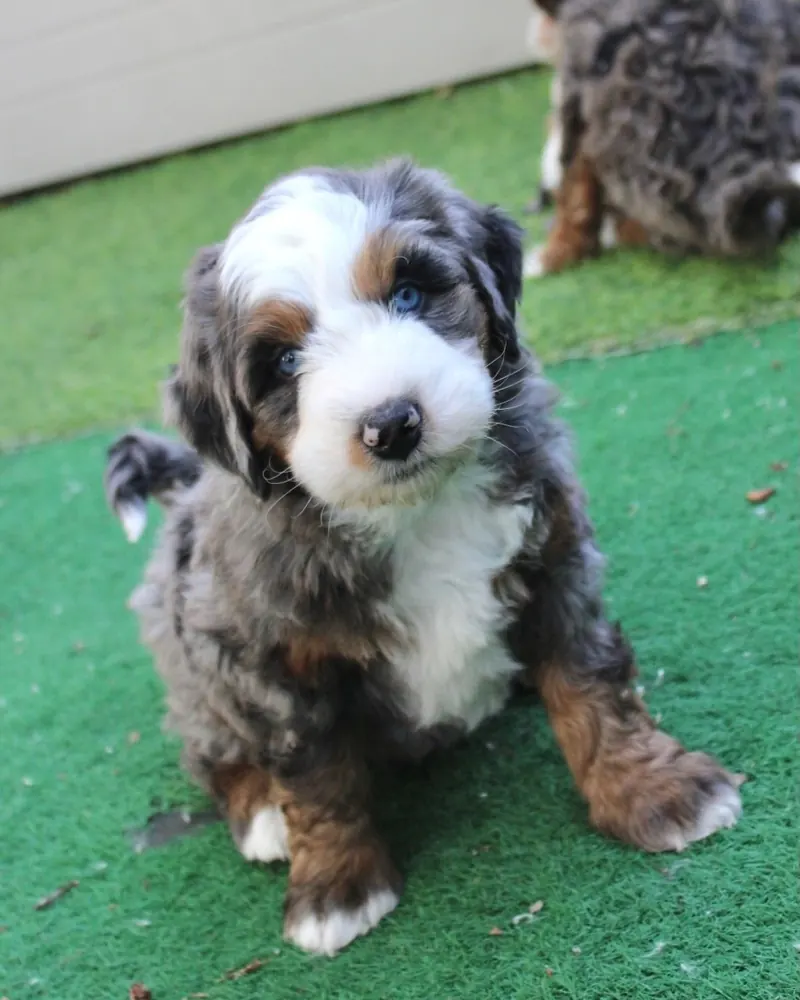
It is a black coat with white markings and no tan. Add tan points and it becomes a tri-color. Take away the white and you have a solid black. The white can be a thin blaze, a chest patch, white feet, or a broad patch over the body.
The words tuxedo and parti are shorthand rather than strict categories. Tuxedo suggests a neat bib and socks. Parti suggests at least half white. Plenty of dogs fall between them.
Where the white falls matters for the name. White limited to the chest and toes is the classic tuxedo. A white blaze up the nose and a white collar suggest a more spotted dog. A mostly white body with black patches on the ears and eyes is a parti. Siblings can range from nearly solid black to heavily white.
Look at photos from several angles when you compare, since a white chest can vanish when a dog sits or turns away. The face and the feet are worth checking in particular, because those are the parts most people notice first.
How does the white form?
White spotting is controlled by the S locus, which Embark tests. An insertion near the MITF gene switches off pigment in patches. A dog with one copy of the variant has limited white, the flash, parti or piebald look. A dog with two copies has far more white, up to nearly all-white.
The Bernese Mountain Dog contributes the classic chest and paw white. The exact pattern still varies, because the genes that govern where white lands are not fully mapped.
That is why white can differ so widely between siblings.
Do black and white Bernedoodles change color?
The white stays white. The black is what moves, since black coats can lighten toward gray or silver as a dog grows. Poodle breeders call this clearing. Against a lightened coat the white may stand out less, and the dog can look more dark gray and white than black and white.
No test is widely used to predict how much, so a young puppy's shade is a loose guide. Ask to see the parents as adults where you can.
The nose, eye rims and pads stay black. If they look brown on a dark dog, the base may be chocolate, which the chocolate page covers.
Is a red tuxedo Bernedoodle the same?
The white works the same way, but the base is red or apricot instead of black. The red page explains that base color and how it ages.
If the red coat lightens with age, the contrast between body and white softens.
Does white on a Bernedoodle affect health?
In general, a modest amount of white is only a coat pattern. Across dog breeds, though, dogs with very extensive white, particularly over the head and ears, have been linked to a higher rate of deafness. That is a general finding about white spotting and not a measured figure for Bernedoodles. If hearing matters to you, a puppy hearing check is the dependable test. The health guide covers other issues.
A hearing check, called a BAER test, is the standard way to test a puppy's hearing, and a vet can explain it.
Dogs with small amounts of white are not generally considered at risk for this.
Does coat color affect personality?
Nothing reliable says so. A tuxedo and a solid black from the same family share a temperament far more than they share a color. Read the temperament guide for what shapes it.
A pattern is chosen by eye, so pick the coat you like without expecting it to say anything about the dog's nature. Meet the puppy, watch how it plays, and decide on that.
How does the coat look when the dog is clipped?
Clipping changes how color reads. A short trim makes the contrast between black and white sharper, while a long, fluffy coat blurs the edges. The grooming guide shows what different cuts do.
White hair shows tear stains, mud and food more than black does, which is a daily care matter and not a health one. Keeping a dark and white dog tidy mostly means regular brushing, plus a gentle daily wipe with a damp cloth around the eyes and mouth.
Where can you see black and white puppies?
The available puppies page from KK Doodles lists current litters with photos.
Black and White Bernedoodle Questions
01What is a tuxedo Bernedoodle?
A mostly black Bernedoodle with a white bib and white on the paws, like formal dress.
02What is a parti Bernedoodle?
One with a large share of white, spread over the body in patches. The word comes from the particolored coat.
03Will my black and white puppy stay that way?
The white stays. The black can lighten toward gray or silver over the first couple of years.
04Are black and white Bernedoodles tri-color?
Only if they also have tan points. Without tan, they are black and white.
05Is a black and white Bernedoodle the same as a tuxedo?
A tuxedo is one version: black with a neat white bib and socks. Black and white also covers wider parti patterns.
06Does white change shedding or allergies?
No link between white and shedding has been shown. Coat type matters, and the shedding guide explains it.
The Other Bernedoodle Colors
Hoping for a Black and White Bernedoodle?
Tell us what you are looking for, and ask about the puppies available now.
Phantom poodles photo: Andrea Brendemühl, Wikimedia Commons, CC BY 3.0, cropped.
