
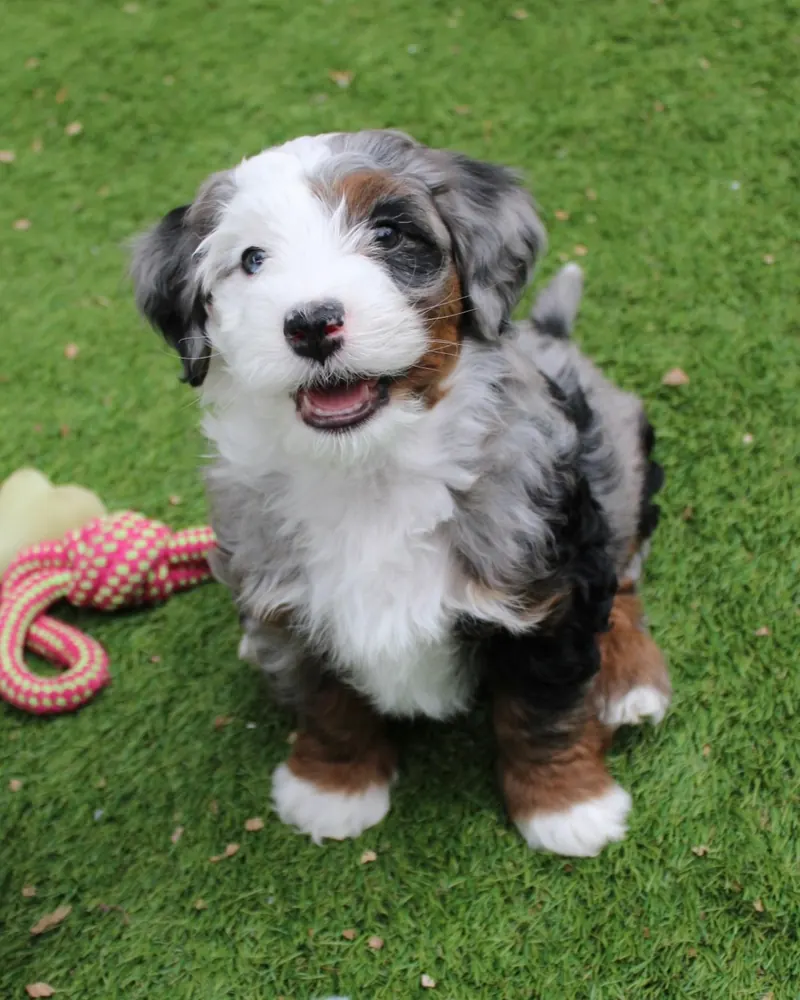
Bernedoodle Sizes
Micro Bernedoodle Puppies and Full Grown Size
A micro Bernedoodle, sometimes called a micro mini, is the smallest end of the mini range. The word describes what a breeder is aiming for, not a size that any registry sets.
This guide explains what "micro" means in practice, how small these dogs end up, how they are bred and what a very small dog needs from its owner. Like every Bernedoodle size, micro is a breeder convention. The Bernedoodle is not a recognized breed, so no one can promise an adult size.
Micro Bernedoodles Available Now

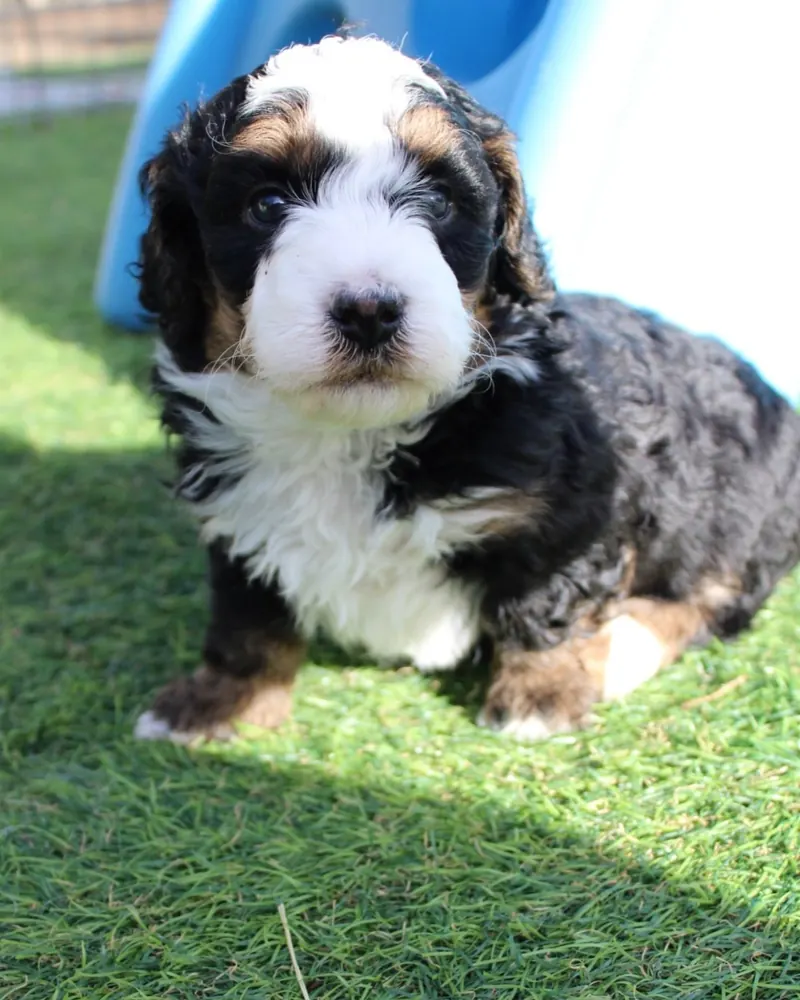
What is a micro Bernedoodle?
A micro Bernedoodle is a Bernedoodle bred to stay on the small side of the mini size. There is no rulebook behind the name, so one person's micro is another person's small mini. Most descriptions put it at the lower end of the mini range of 25 to 49 pounds, or a little below it, often around 15 to 30 pounds.
The label began as a way to separate the tiniest minis from the rest, and it spread because it is easy to remember. It tells you the goal, not the result. A puppy sold as micro is a puppy whose parents were small, which makes a small adult more likely but never certain.
"Micro mini" and "micro" mean the same thing. The extra word is just a different habit in naming. If you see "extreme micro" or similar, treat it as a sales label with no extra meaning.
How big does a micro Bernedoodle get when full grown?
Expect something close to 15 to 30 pounds and a height under about 16 inches, though that depends on the parents and on luck. A puppy's adult size is never fixed at birth. Some micros end up at 20 pounds and others pass 30, and a few grow larger than the label suggested.
Think of it this way: a Bernese Mountain Dog is 70 to 115 pounds according to the AKC, and a Miniature Poodle is 15 inches or under. Getting a dog that stays tiny from that pairing takes planning across several generations, and even then there is natural variation inside a litter. This is also why the "full grown" figure for a micro is best read as a guess. If a precise adult weight is essential for your housing or travel plans, it is worth choosing a larger size band to be safe. The size and weight chart sets the sizes next to each other.
How are micro Bernedoodles bred?
A first generation cross between a Bernese and a Poodle will not usually produce a micro. The Bernese parent is simply too large. Small Bernedoodles are more often the result of breeding a mini Bernedoodle to a small Miniature Poodle or a Toy Poodle, then repeating with the smaller puppies over several generations.
The AKC puts the Toy Poodle at 10 inches or under, which is where the smallest micros get their size. Later generations can bring a more consistent size, but they also carry less Bernese in the mix, so the dog's look and personality tilt toward the Poodle. The generations guide explains what F1b, F2 and multigen mean for size and coat.
What is the difference between a micro and a mini Bernedoodle?
The gap is mainly weight, and the edge between them is blurry.
| Micro | Mini | |
|---|---|---|
| Adult weight | About 15 to 30 pounds | About 25 to 49 pounds |
| Typical build | Fine boned, compact | Sturdy, athletic |
| Carry on a hip or lap | Easy | Possible when young |
| Rough play with children | Needs close supervision | Usually holds up better |
If a 35 pound dog would suit you, a mini Bernedoodle may be the easier choice, since its size is steadier and its frame is stronger.
What care does a very small Bernedoodle need?
Small dogs are not low maintenance dogs. A few things matter more with a micro than with a larger Bernedoodle.
- Fragility: Tiny legs break more easily. Teach children to sit down to hold the puppy, and block stairs and sofa jumps at first.
- Blood sugar: Very small puppies can drop their blood sugar if they skip meals, so feed on schedule and ask your vet what to watch for.
- Knees: Kneecaps that slip out of place, called patellar luxation, are more common in small and toy dogs. Your vet can check this at routine exams.
- Teeth: Small mouths crowd teeth, so brush often and plan dental cleanings.
- Coat: A small dog with a curly coat still mats. Plan regular brushing and a trim every few weeks. See the grooming guide.
Is a micro Bernedoodle the right dog for you?
Before deciding, it helps to picture the day-to-day. A very small dog is carried, scooped up and stepped around more often than a bigger one. It rides in a lap on a car trip and fits under an airline seat more easily when it is still a puppy, though airline rules differ and you should check them for the specific flight. It also eats less, but quality food in small portions still matters.
A micro suits a household that wants a Bernedoodle's face and gentle nature in a body that fits into a small home or a carry-on trip. It is a better match for adults, or for older children who are calm around a smaller dog, than for toddlers.
It is a less comfortable choice if you want a trail partner for long hikes. Micros can walk a lot, but they will not match a larger Bernedoodle on steep or long days. Ask yourself what a typical week with the dog looks like, then pick the size that fits that week. If you have questions, the contact page is the place to ask, and the available puppies page shows current litters.
Quick Answers
01How big is a full grown micro Bernedoodle?
Usually about 15 to 30 pounds and under 16 inches tall, though the range is a breeder convention and individual dogs vary. No one can promise an exact adult size.
02Is micro mini the same as micro?
Yes. Both names describe the smallest group of mini Bernedoodles. Neither is an official size standard.
03Do micro Bernedoodles shed?
Many shed lightly, and curlier coats trap more loose hair, which then needs brushing out. No coat is guaranteed to be free of shedding or allergy safe.
04Are micro Bernedoodles good with kids?
They can be, with supervision. Their small bones need gentle handling, so older children who can follow rules tend to be a better fit than toddlers.
05How long do micro Bernedoodles live?
Smaller dogs tend to live longer than large ones, but there are no solid figures for micros specifically. See the lifespan guide for what is known.
When You Are Ready
Looking for a Micro Bernedoodle?
See the puppies available now, or ask us anything about size and growth.