

Bernedoodle Guide
How Long Do Bernedoodles Live?
You will often see 12 to 15 years quoted as the Bernedoodle lifespan, with smaller dogs near the top of that range. It is a hopeful figure, and it needs a caution: nobody has run a large study of Bernedoodles themselves, so the number is an estimate built from the two parent breeds and from owner reports.
Here is what is known about each parent, how the guess is made, why size matters and which everyday choices can add healthy years to a dog's life.
What is the average lifespan of a Bernedoodle?
The honest answer is that it is not known precisely. Pet and breeder sources commonly give a range of about 12 to 15 years, and some quote a lower range for standards. These figures are not backed by large veterinary studies of the cross, which is still young and not tracked by any breed club in the way purebreds are.
The useful evidence is the numbers on the two parents, and the Bernedoodle's expected lifespan sits somewhere between them. The sections below set those figures out so that you can judge the common claims yourself.
How long do Bernese Mountain Dogs live?
Not long. The American Kennel Club gives 7 to 10 years for the breed, and the Bernese Mountain Dog Club of America describes the average life as slightly more than 7 years, with some dogs reaching 10 and beyond. Published studies agree: a Danish questionnaire study reported an average of about 7.1 years, and a Swiss study found a median of 8.4 years, with females living longer than males.
Cancer, particularly histiocytic sarcoma, is the leading cause of early death in the breed. The breed club itself calls the short lifespan a concern, and breeders and vets are working on it with health testing, breeding records and genetic studies. Some individual Bernese do reach 10 to 12 years, but they are the exception rather than the rule, which is why the Bernese side of the pedigree deserves attention when you read any lifespan claim for the cross.
How long do Poodles live?
Considerably longer. The American Kennel Club lists 10 to 18 years across the toy, miniature and standard Poodle, and as in most breeds the smaller varieties tend to outlive the larger ones. That is one consumer-level figure rather than a clinical study of each variety, but it matches the general pattern in dogs.
Poodles are also bred in a wide range of sizes, and the standard Poodle is large enough to share some large-dog risks such as bloat. Poodles have their own health issues, including Addison's disease, sebaceous adenitis and eye conditions, so a long life is typical rather than assured.
Does the Bernedoodle live longer than a Bernese?
It might, but no one has proven it. Breeders often point to "hybrid vigor", the idea that crossing two breeds reduces inherited disease. There is some truth in it, since mixing breeds can lower the chance of a puppy inheriting two copies of a harmful recessive gene. The effect is not guaranteed and it does not remove risks that are common in both lines or that are not recessive.
Bernese cancer risk, for example, may be partly passed on in the cross. A Bernedoodle that is 50 percent Bernese carries a real share of that background, and a standard that looks like a Bernese on the outside may share its risks inside. Anyone who promises a long life because it is a cross is promising more than the science allows. The health problems guide covers what is actually seen in the cross.
How long do mini Bernedoodles live compared with standards?
In dogs generally, smaller bodies tend to mean longer lives, and large breeds age faster. That pattern is the main reason owners and breeders expect minis to live longer than standards. That is plausible and in line with the parents: the smaller Poodle sizes live longer, and a mini has less Bernese-style bulk.
| Size | Commonly quoted lifespan | What backs it up |
|---|---|---|
| Toy or tiny | Often 14 years or more | Small-dog trend; no cross-specific study |
| Mini | Often 12 to 15 years | Between the parents; no cross-specific study |
| Standard | Often 10 to 12 years, sometimes less | Large-dog trend and the Bernese side |
Treat the table as informed estimates, not data. To compare sizes in detail, see the mini Bernedoodle page and the standard Bernedoodle page.
What health problems can shorten a Bernedoodle's life?
The conditions most often discussed come from the two parents:
- Cancers: including histiocytic sarcoma and others, the biggest worry from the Bernese side.
- Joint disease: hip and elbow dysplasia, which affect comfort and mobility as the dog ages.
- Bloat: a sudden stomach twist more common in large, deep-chested dogs, which is an emergency.
- Eye disease: several inherited eye conditions occur in both breeds.
- Von Willebrand disease and degenerative myelopathy: inherited conditions with available DNA tests.
- Addison's disease and sebaceous adenitis: seen in Poodles.
Screening the parents (hips, elbows, eyes and DNA tests where they exist) lowers the odds but cannot remove them. A buyer can ask any breeder what testing was done and see the results.
What helps a Bernedoodle live a long life?
You cannot control genetics, but you can influence the rest:
- A lean body: studies in dogs link a lean weight to longer life and less arthritis. You should feel the ribs easily.
- A complete diet in measured portions: see the Bernedoodle food guide for feeding.
- Regular exercise: daily walks and play, adjusted to age and joints.
- Preventive vet care: vaccinations, parasite prevention and yearly checkups, with twice-yearly visits for seniors.
- Dental care: brushing and checks, since dental disease affects the whole body.
- Large-dog safety: smaller meals, no hard exercise right after eating and knowing the signs of bloat.
- Early attention to lumps and changes: have any new growth looked at promptly.
Good care also includes grooming, since matted skin hides problems. The grooming guide explains the routine.
At what age is a Bernedoodle a senior?
Smaller Bernedoodles are often considered seniors at around 8 to 10 years, and standards earlier, around 6 to 8 years. Signs include stiffness after rest, slower walks, gray around the muzzle, weight changes and more sleep. Many of these are treatable, so mention them to your vet rather than assuming they are just age.
For a senior, softer bedding, ramps instead of jumps, gentler exercise and more frequent checkups make the later years more comfortable. Size also shapes when ageing starts, as explained in the guide to how big Bernedoodles get.
How should you think about lifespan when choosing a puppy?
Choose with open eyes, and keep in mind that longevity is one factor among several, alongside temperament, size and coat. Pick the size that fits your life, ask about the ages and health of the parents and grandparents, and ask what screening was done. A parent line with long-lived dogs is a better sign than any promise about a cross. It is also worth asking what the grandparents died of and at what age, as cancer in young dogs in a line is a warning sign. A breeder who knows these answers and shares them freely is showing the kind of record-keeping that matters most for longevity. Budget for senior care too, because a dog that lives to 12 or 13 will need more vet visits, medication and comfort adjustments in the last few years.
If you are considering a puppy, the puppies available at KK Doodles are on the available puppies page, and the introduction to the Bernedoodle covers the basics of the cross. A dog is a commitment of a decade or more, so plan for the whole journey.
Quick Answers
01Do female Bernedoodles live longer than males?
There is no study of the cross to say. In Bernese Mountain Dogs a Swiss study found females lived longer, so the same may hold for the cross, but it is unconfirmed.
02What is the oldest age a Bernedoodle can reach?
Some live well into their teens, especially smaller ones. Individual stories exist, but they are not a measure of what to expect.
03Is 10 years old for a Bernedoodle?
For a standard, 10 is a good age and well into the senior years. For a mini, 10 is usually still inside the commonly quoted range.
04Can neutering or spaying change lifespan?
Studies in dogs are mixed, and the answer depends on breed and size. Ask your vet about the timing that fits your dog.
05Does a longer-lived parent line mean a longer-lived puppy?
It improves the odds, because longevity runs in families, but it is not a guarantee.
Bernedoodle Puppies Available Now


Keep Reading
Bernedoodle Health Problems and Health IssuesCommon Bernedoodle health issues, from hip dysplasia and cancer to eye and skin problems, plus the tests that exist and...Read the guide
What to Feed a Bernedoodle: Food, Amounts and ScheduleThe best food for a Bernedoodle: what to feed puppies and adults by size, how much, a feeding schedule by age, foods to...Read the guide
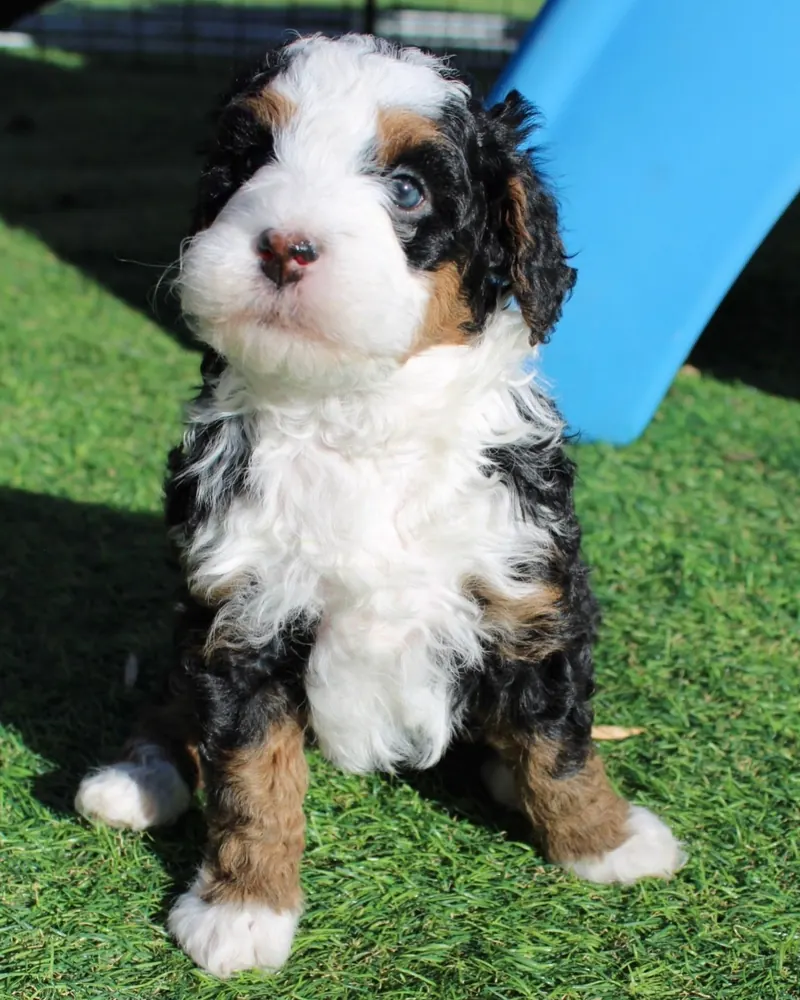 Mini BernedoodlesAbout 25 to 49 poundsLearn more
Standard BernedoodlesThe original, largest sizeLearn more
 How Big Do Bernedoodles Get? Full Grown Size and WeightHow big do Bernedoodles get? Full grown height and weight for toy, mini and standard sizes, a hedged growth chart by age...Read the guide
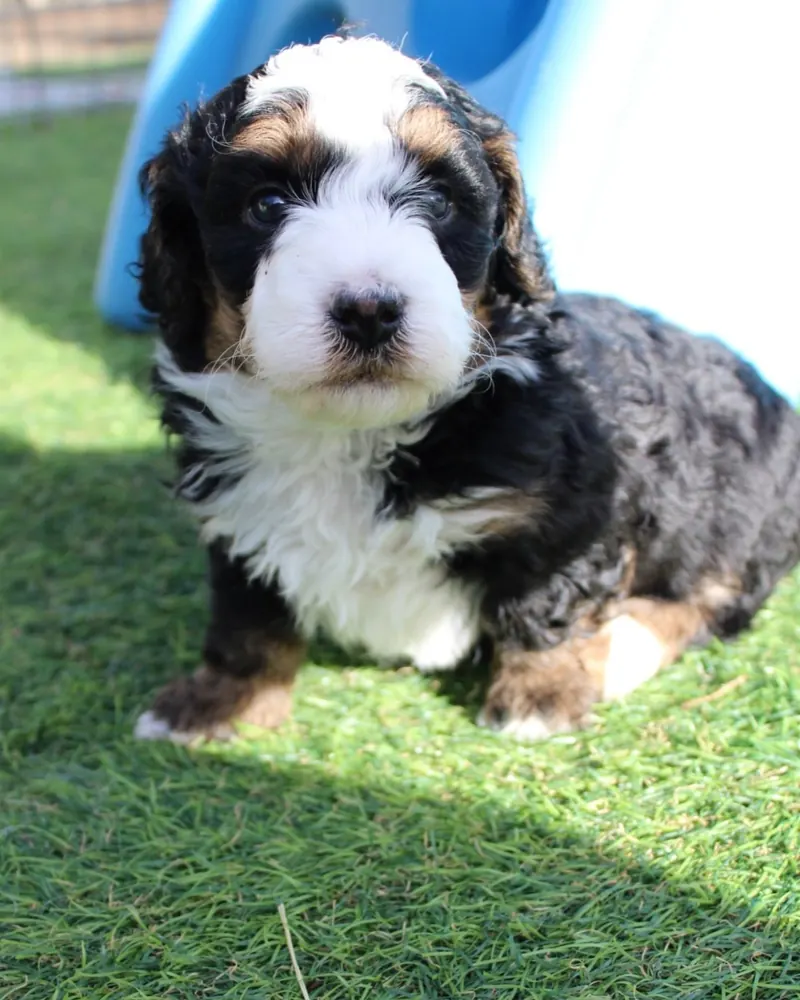 Bernedoodle vs Goldendoodle: How Do They Compare?Bernedoodle vs Goldendoodle compared fairly on size, coat, temperament, health and lifespan, plus Aussiedoodle and...Read the guide
When You Are Ready
Thinking About a Bernedoodle Puppy?
See the puppies available now, or ask us anything about the breed.