
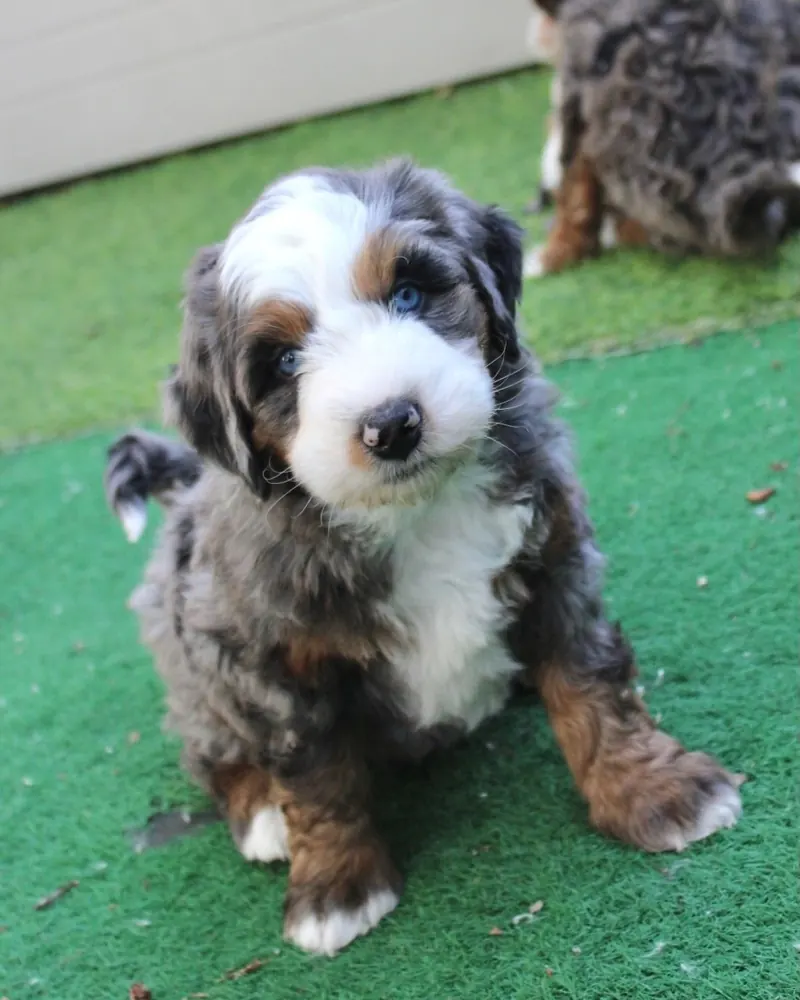
Bernedoodle Guide
What to Feed a Bernedoodle: Food, Amounts and Schedule
Choosing the best food for a Bernedoodle is less about a magic brand and more about matching the food to the dog's age, adult size and body condition. A 15 pound tiny Bernedoodle and a 90 pound standard have very different needs, and a growing puppy is different again from an adult or a senior.
Below you will find what to look for on a label, how to work out portions, a feeding schedule by age, the foods that are dangerous, and how to keep weight where it belongs. It is general guidance, so your veterinarian should have the final word on your own dog. To estimate where your puppy is heading, see the Bernedoodle size and weight chart.
What is the best dog food for a Bernedoodle?
There is no single best food, and no brand is proven superior for this cross. Instead, look for a complete and balanced food that suits the life stage and size of your dog. Practical markers of a sound choice:
- An AAFCO nutritional adequacy statement on the bag, saying the food is complete and balanced for the right life stage (growth, maintenance or all life stages).
- A named animal protein as a leading ingredient, such as chicken, lamb, fish or beef.
- A manufacturer that employs veterinary nutritionists and runs feeding trials or tests its recipes, which you can usually confirm on the company's website.
- A size-appropriate kibble. Tiny and mini dogs often do better with smaller pieces.
Dry, wet, fresh-cooked and mixed feeding can all work when the food is complete and balanced. Choose what you can afford to feed consistently and what your dog digests well.
How much should a Bernedoodle eat?
Start with the feeding chart on the bag, which is based on weight, then adjust by how your dog looks and feels. Charts are averages. Active dogs, neutered dogs and easy keepers all differ, so the label is a starting point rather than a rule.
A simple routine:
- Weigh the dog every few weeks as a puppy and every month or two as an adult.
- Feed the amount listed for the expected weight, split into the number of meals suited to the age.
- Check body condition. You should be able to feel the ribs under a thin layer of fat without pressing hard, and see a waist from above.
- Cut back about ten percent if the dog is gaining too fast, and increase if ribs and hips show.
- Count treats. Many vets suggest keeping treats and extras to no more than about ten percent of daily calories.
A standard Bernedoodle will eat several times more than a mini, but the amount per pound drops as the dog gets bigger, because smaller dogs burn more calories per pound.
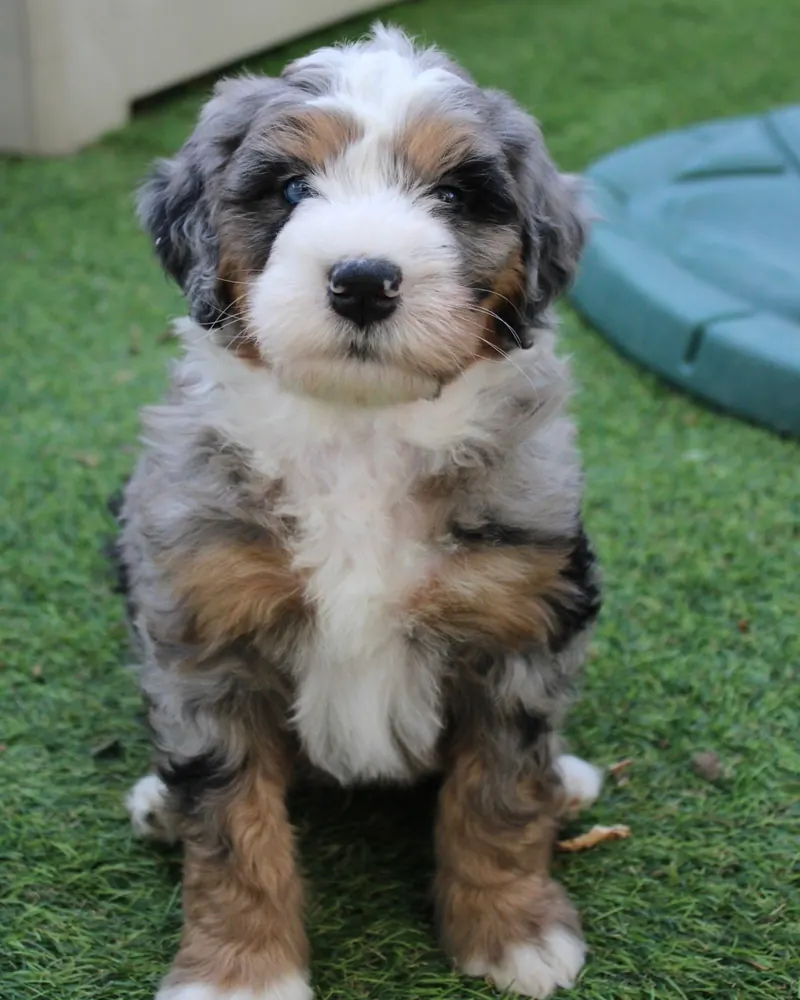
What should you feed a Bernedoodle puppy?
Use a food made for growth, which has the extra protein, fat and minerals a puppy needs. Keep the diet steady. Whatever the puppy was eating when it came home, keep feeding it for at least the first week or two, and switch gradually over about seven to ten days if you change, mixing a little more of the new food each day. Abrupt changes often cause loose stools.
Choose by expected adult size:
- Tiny and mini: a puppy or all-life-stages food for small or medium breeds is fine, in small kibble.
- Standard: a large-breed puppy food, covered in the next section.
Use the mini and standard pages to understand how those sizes are usually defined.
How often should a Bernedoodle puppy eat?
Young puppies have small stomachs and need frequent meals. This schedule is a common vet-recommended pattern, not a standard, so adjust with your vet:
| Age | Meals per day | Notes |
|---|---|---|
| 8 to 12 weeks | 3 to 4 | Small portions, evenly spaced, with water available |
| 3 to 6 months | 3 | Growth is fast, so increase amounts as weight rises |
| 6 to 12 months | 2 | Move to morning and evening meals |
| Adult | 2 | Twice daily is easier on the stomach than one large meal |
Feed at set times, pick up the bowl after fifteen or twenty minutes, and keep the routine predictable. Regular meals also make house training far easier, because what goes in on a schedule comes out on one. See the temperament and training guide for the rest of the routine.
Do standard Bernedoodles need large-breed puppy food?
Usually yes. Dogs expected to weigh over 50 or 60 pounds as adults are generally fed a large-breed puppy formula. The reason is calcium. Growing large-breed puppies are sensitive to too much calcium, and feeding excess calories or minerals can contribute to developmental bone and joint problems. AAFCO has required growth foods to state whether they meet the large-size standard since 2016, which means dogs expected to reach 70 pounds or more.
On the bag, look for wording that the food is formulated for growth including growth of large-size dogs. Avoid foods that say "except for growth of large-size dogs." Equally important is not overfeeding. Slow, steady growth is healthier for joints than a fast one, which is why you keep puppies lean. Do not add calcium supplements unless your vet tells you to.
Hip and elbow problems are a known concern in the Bernese, so read the Bernedoodle health problems guide for the bigger picture.
How long should a Bernedoodle eat puppy food?
It depends on size. Small and mini dogs typically finish growing sooner, often moving to adult food somewhere around 9 to 12 months. Large dogs mature more slowly, and a standard Bernedoodle may stay on large-breed puppy food until roughly 12 to 18 months, when your vet agrees growth has slowed. Switch gradually over a week or so. If your dog is gaining weight too quickly on puppy food, ask your vet about moving earlier. Size groupings are breeder conventions, not official breed categories.
What foods are dangerous for Bernedoodles?
Keep these away from any dog:
- Chocolate and cocoa, and caffeine.
- Grapes and raisins, which can cause kidney failure in some dogs.
- Onions, garlic, chives and leeks.
- Xylitol, a sweetener found in some sugar-free gum, candy, baked goods and peanut butter. Check labels.
- Macadamia nuts.
- Alcohol and raw yeast dough.
- Cooked bones, which can splinter, and corn cobs, which can block the gut.
Fatty table scraps can also trigger pancreatitis. If you think your dog has eaten something toxic, call your veterinarian or an animal poison hotline straight away, rather than waiting for symptoms.
Can Bernedoodles eat chicken, and what about food allergies?
Yes, most Bernedoodles eat chicken without trouble, and it is one of the most common proteins in dog food. Food allergies in dogs are possible but less common than people think. True food allergy usually shows as itchy skin, ear infections or soft stools that continue year-round. Bernedoodles can also have skin and ear problems from other causes such as pollen or fleas, so do not guess.
If you suspect a food problem, work with your vet on an elimination diet using one novel protein for several weeks. Switching brands repeatedly does not answer the question. And for the allergy-sufferer side, whether a Bernedoodle suits a person with allergies is covered in the shedding and allergies guide.
How do you keep a Bernedoodle at a healthy weight?
Weight control is the most useful thing you can do for joints and long-term health. Extra weight puts more stress on hips and elbows, and a well-known long-term study of Labrador Retrievers found lean dogs lived longer than heavier ones.
- Measure food with a cup or kitchen scale, rather than guessing.
- Use part of the daily kibble for training treats.
- Choose low-calorie rewards such as green beans or carrot pieces.
- Keep up daily exercise suited to age and size.
Bloat, or gastric dilatation and volvulus, affects deep-chested dogs including the Bernese. It is an emergency, with a swollen belly, unproductive retching and restlessness. Smaller meals and avoiding hard exercise right after eating are commonly advised, though prevention research is mixed. Ask your vet, and see the grooming guide for the coat side of care. You can see the puppies available at KK Doodles.
Quick Answers
01Is wet or dry food better for a Bernedoodle?
Neither is better in itself. Both work when complete and balanced. Dry food is convenient and affordable, and wet food can help picky eaters, so choose by your dog's needs.
02Should a Bernedoodle eat grain-free food?
Most dogs do not need it. The FDA has investigated a possible link between some grain-free diets and a heart condition called dilated cardiomyopathy, so talk to your vet before choosing one.
03How much water does a Bernedoodle need?
Fresh water should always be available. A rough guide for adult dogs is about an ounce per pound of body weight per day, more in hot weather or after exercise.
04Can Bernedoodles eat human food?
Some plain foods, such as cooked chicken or carrots, are fine in small amounts. Avoid the dangerous foods listed above and anything seasoned, salty or fatty.
05What treats are good for training?
Small, soft, low-calorie pieces work best because you can give many without adding much to the daily total.
Bernedoodle Puppies Available Now
Keep Reading
How Big Do Bernedoodles Get? Full Grown Size and WeightHow big do Bernedoodles get? Full grown height and weight for toy, mini and standard sizes, a hedged growth chart by age...Read the guide
Bernedoodle Health Problems and Health IssuesCommon Bernedoodle health issues, from hip dysplasia and cancer to eye and skin problems, plus the tests that exist and...Read the guide
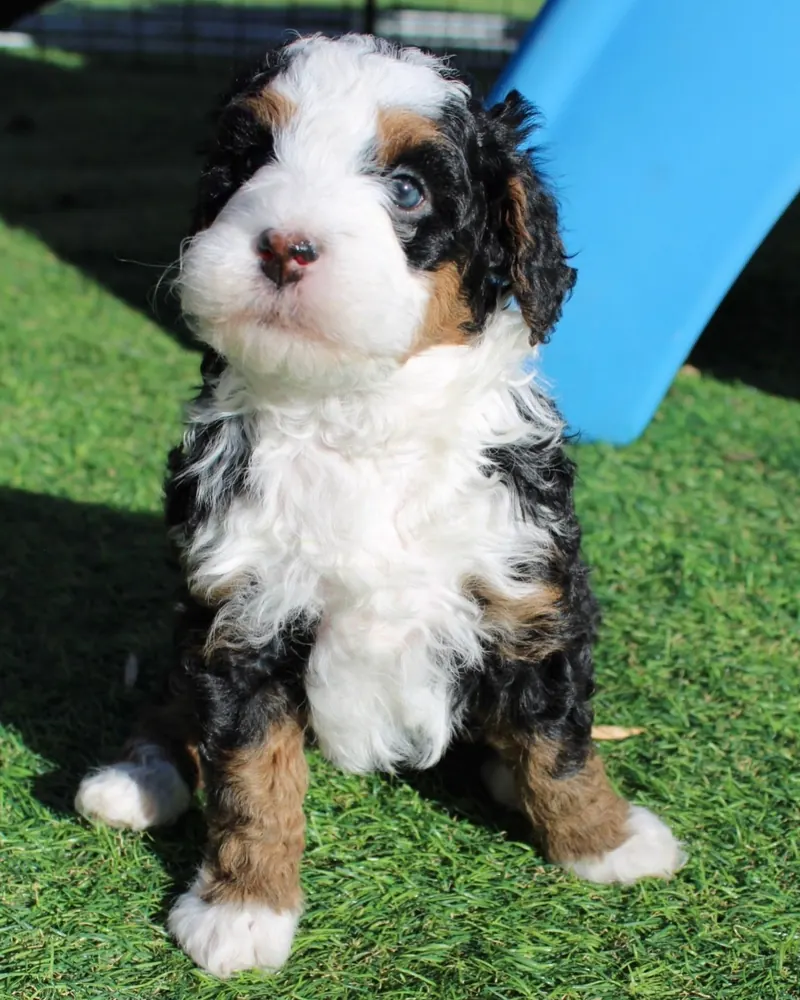 How Long Do Bernedoodles Live?How long do Bernedoodles live? Commonly quoted ranges, what the Bernese and Poodle parents tell us, mini versus standard,...Read the guide
Mini BernedoodlesAbout 25 to 49 poundsLearn more
 Standard BernedoodlesThe original, largest sizeLearn more
 Bernedoodle Temperament and PersonalityWhat the Bernedoodle temperament is really like: energy, intelligence, barking, training, kids, other pets, apartments...Read the guide
When You Are Ready
Thinking About a Bernedoodle Puppy?
See the puppies available now, or ask us anything about the breed.