
Red and Apricot Bernedoodles
What the color is, how it is bred, and how it can change as a puppy grows.
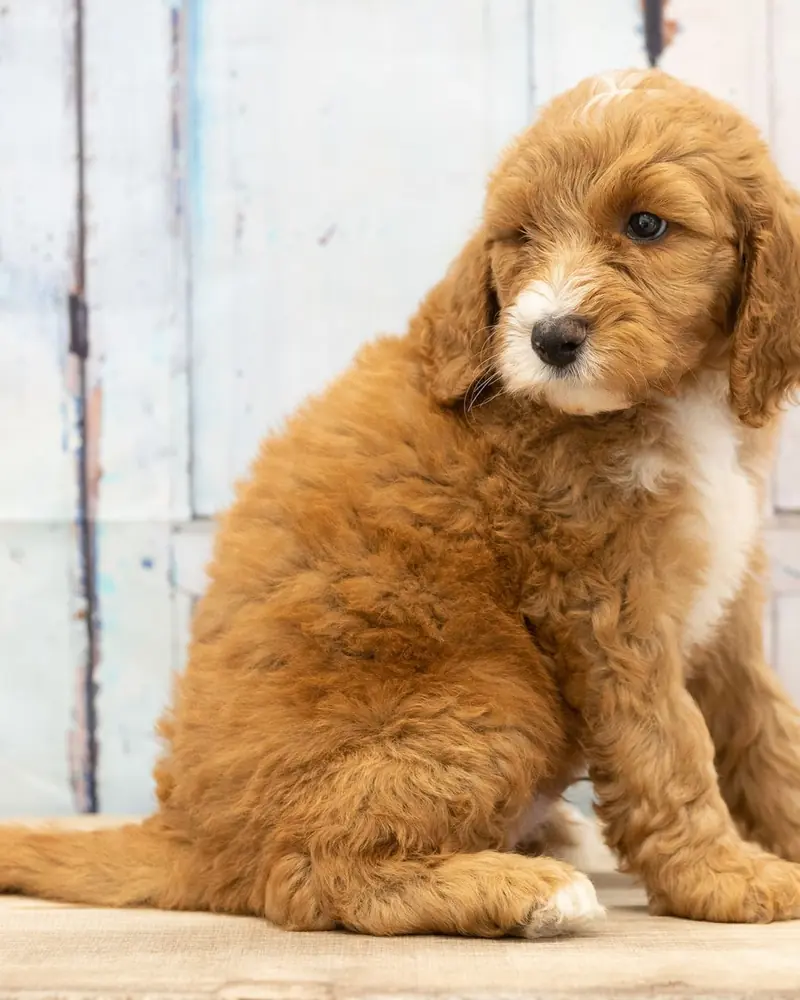
A red Bernedoodle has a coat in warm shades of copper, red or apricot. Some are solid, some have white on the chest and paws, and the white version is sold as a red tuxedo. Apricot is a lighter, softer take on the same family of color.
Red is the Poodle's contribution to the Bernedoodle, since a Bernese Mountain Dog is black, white and rust. That Poodle origin shapes how red is inherited and why it so often lightens with age. The page also sorts out the name apricot, which gets used in several different ways.
Looking for a Puppy? See the Other Colors
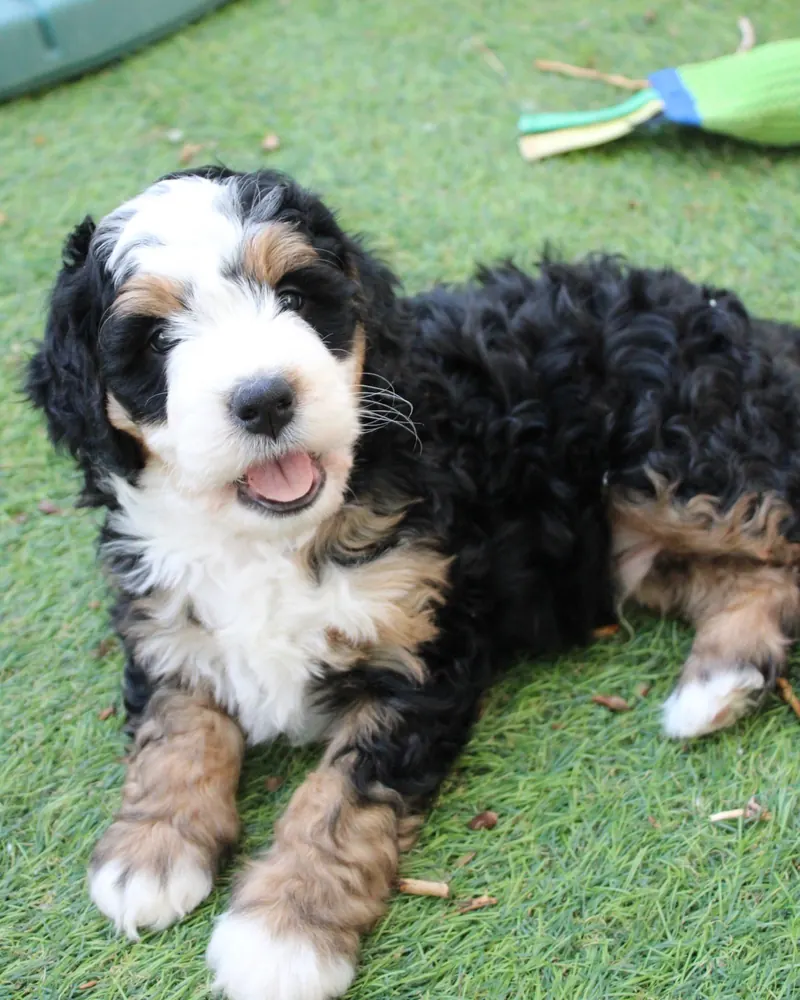
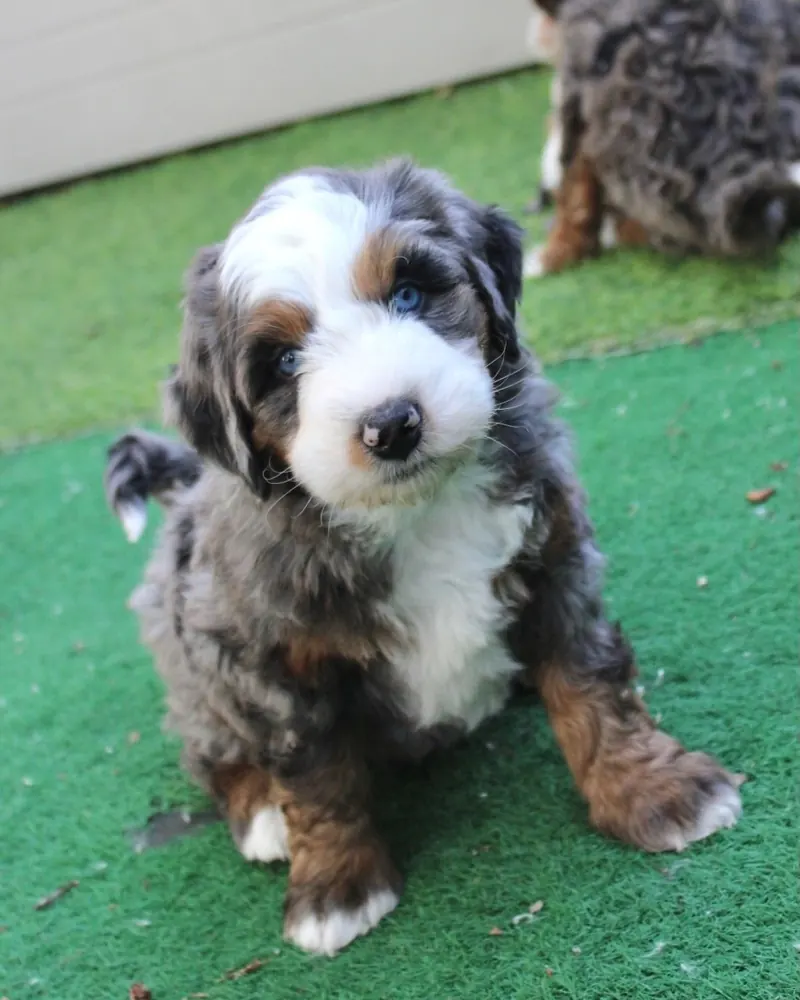
There are no red Bernedoodle puppies listed right now. See the tri-color and merle puppies, or tell us what you are hoping for.
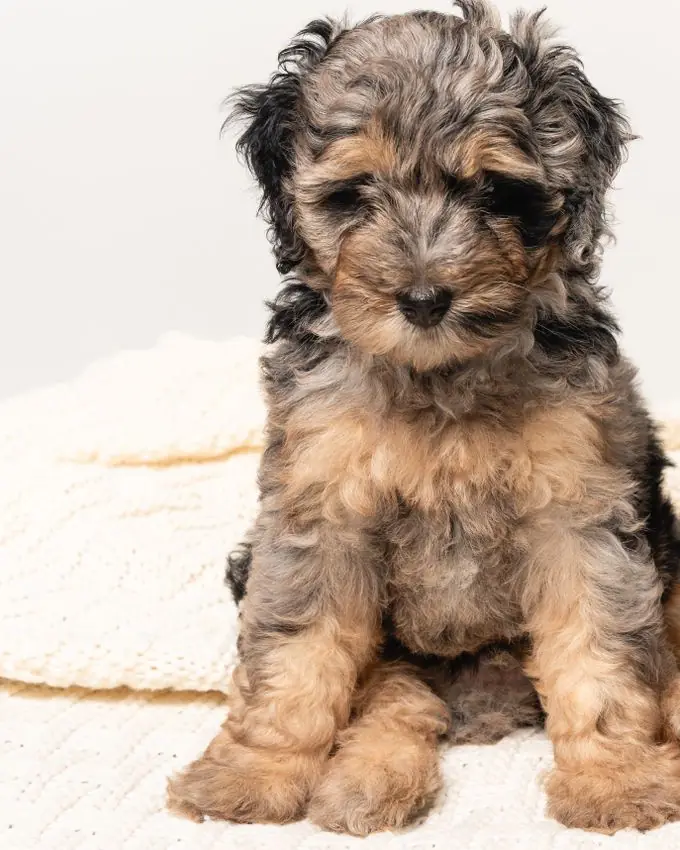
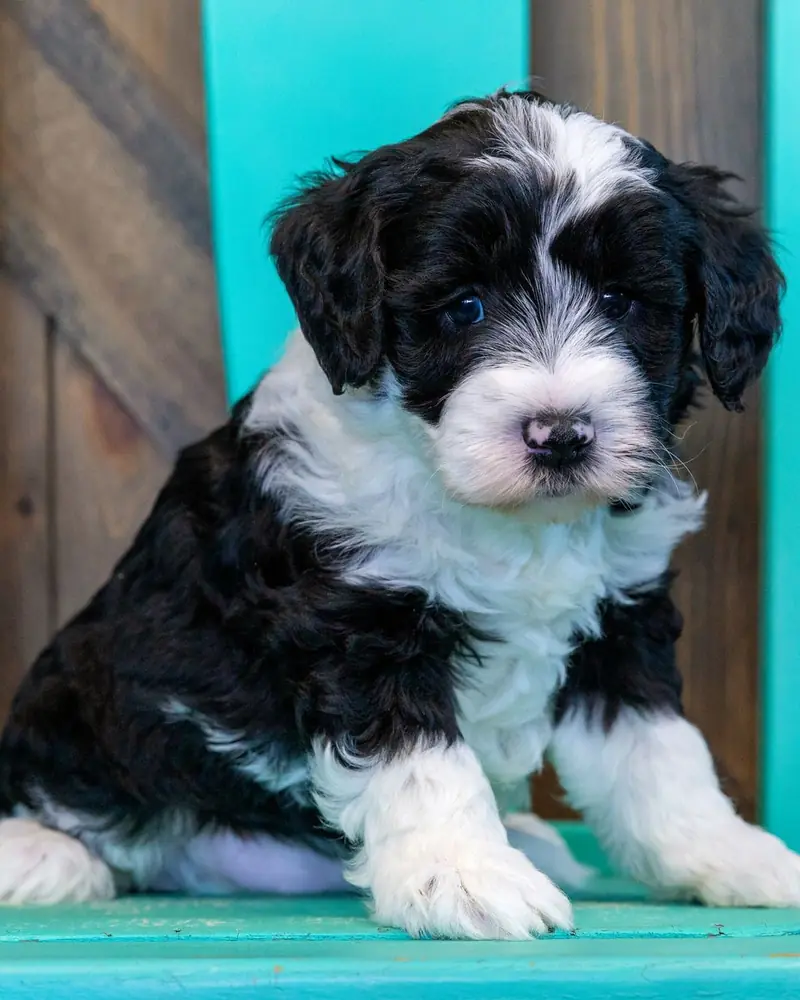
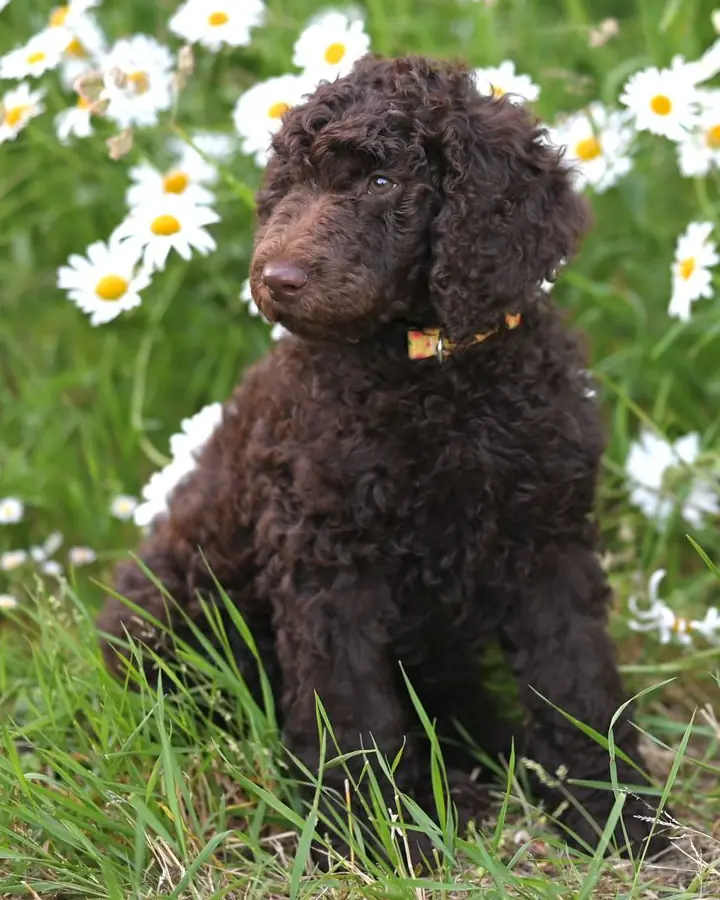
What is a red Bernedoodle?
It is a dog whose coat carries no black hairs, only red pigment, spread across the whole body. The shade runs from deep copper through true red to apricot and cream. Names are loose, and one breeder's apricot is another's light red.
With white added, you get a red and white or red tuxedo Bernedoodle. That pattern is produced by the same white spotting that makes a black and white Bernedoodle.
The nose and eye rims are dark pigment, black or liver, framing the face against the red. A red tuxedo has a red body with a white bib and socks.
Natural light matters here too. Indoor lighting can turn red orange or apricot yellow, and a camera flash flattens the depth that makes a deep red look rich.
How is red inherited?
Red is recessive. At the E locus, a dog needs two copies of the recessive variant to be red all over. Embark explains that these dogs cannot make dark hairs, whatever their other genes say. A separate set of genes then sets the shade. Intense red looks like deep red or the apricot of some Poodles, and dilute red looks cream or white.
Because it needs two copies, two dark parents who each carry a hidden red copy can produce a red puppy. Read about generations for how crosses carry these genes.
A red coat tells you very little about the genes beneath it. The recessive red hides the rest of the color code, such as brown, tan points or even merle. Only a DNA test shows what is underneath.
Do red Bernedoodles fade?
Red and apricot both clear, according to Poodle breeders and owners, meaning the coat lightens toward cream as the dog matures. Some sources blame ultraviolet light, others say it is primarily genetic, and the sources disagree on the split.
A puppy can therefore look deeper red than the adult will. Photos of the parents grown are a fair, not a perfect, guide.
Poodle breeders use the words holding and clearing. A red that holds keeps its depth, and one that clears moves toward apricot, then cream.
If you want to judge how a puppy may look later, ask for photos of the parents as adults and of the puppy at several ages. A single snapshot of a young red says little about the final shade.
What is the difference between red and apricot?
Mostly the shade. Red is deeper and apricot is lighter and warmer, but the underlying genetics are the same recessive red with different intensity. Poodle people note that red and apricot become hard to tell apart once they clear, and cream is often mistaken for either. If you want to compare to a shaded coat, the sable page shows the other way a Bernedoodle gets a red look.
Cream is a third name that gets mixed in, and cream dogs are often mistaken for apricot or white. Daylight photos give the truest shade.
The shade is the only thing the word tells you, and it is not a measured standard. Two dogs sold under one name can look a step apart.
Can a red Bernedoodle be merle or have a black nose?
A red coat can hide merle, because merle only acts on dark pigment. A red dog can carry the gene and pass it on without showing the pattern, and DNA testing is the only dependable check. The nose and eye rims follow the brown gene, so a red dog can have a black or a liver nose. See merle Bernedoodles and chocolate Bernedoodles for those pieces.
Eye color does not settle it either, since blue eyes can come from other genes.
Does red affect health or temperament?
Nothing reliable links red to a health problem or to personality. Temperament is shaped by breeding, handling and training. The temperament guide goes deeper.
Light coats show staining around the eyes and mouth more than dark ones, so a red or apricot dog may need a daily wipe with a damp cloth. That is a grooming habit and not a health issue.
Does red come in all sizes?
Yes. Color is independent of size, and red appears in mini, standard and others. The mini Bernedoodle page and the full grown chart have the numbers.
A cut changes how much of the coat's surface you see, so a red can look a different shade after a trim. The grooming guide explains the common cuts.
Where can you see red puppies?
The available puppies page from KK Doodles shows what is listed now.
Red Bernedoodle Questions
01Is red a dominant or recessive color?
Recessive. A puppy needs a red copy from both parents to be red all over, and dark-coated parents can carry a hidden copy.
02What is a red tuxedo Bernedoodle?
A red or apricot dog with white on the chest, paws or face.
03Will my red puppy go cream?
It may. Red and apricot coats commonly lighten as the dog matures.
04Why do some red dogs have a black nose?
Nose color follows the brown gene, not the red gene, so a red dog can have a black or liver nose.
05Can red Bernedoodles be merle?
The gene can be present under a red coat without showing, so the answer needs a DNA test rather than a look at the dog.
06Are red Bernedoodles different in temperament?
No reliable evidence links red coats to personality. Breeding, handling and training shape it.
The Other Bernedoodle Colors
Hoping for a Red Bernedoodle?
Tell us what you are looking for, and ask about the puppies available now.
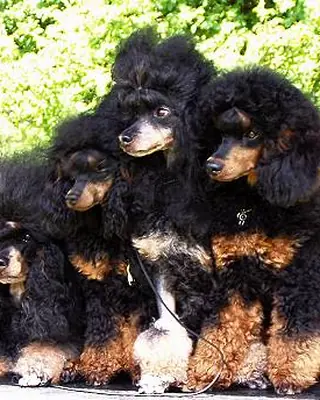
Phantom poodles photo: Andrea Brendemühl, Wikimedia Commons, CC BY 3.0, cropped.
