Phantom Bernedoodles
What the color is, how it is bred, and how it can change as a puppy grows.
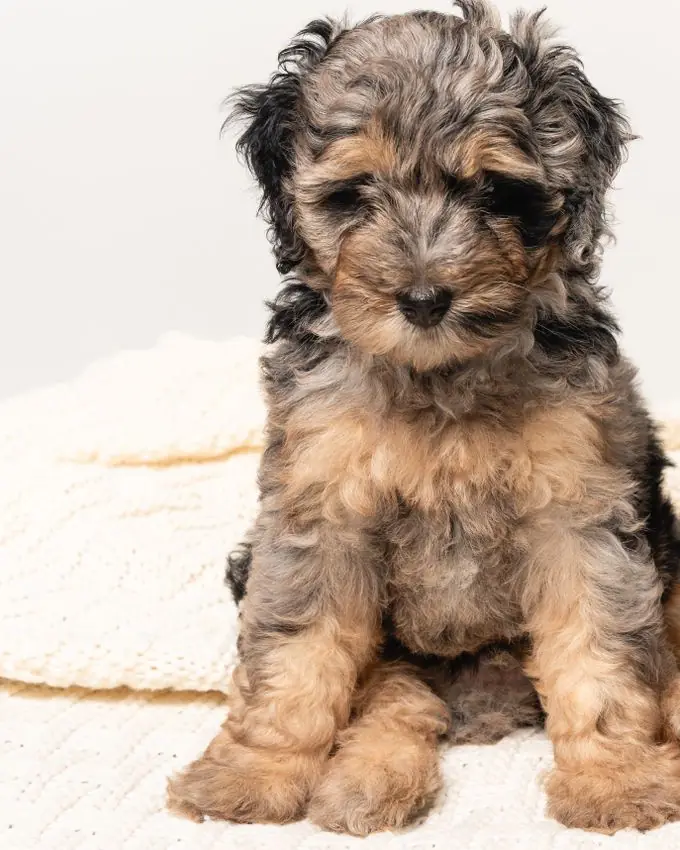
A phantom Bernedoodle wears a single main color, usually black, brown or blue-gray, with tan markings that look like a faint shadow of a second dog: spots above the eyes, on the cheeks and muzzle, on the chest, down the legs and under the tail.
A phantom is close to a tri-color without the white, at least in pattern terms. This page sets out how the markings are made, how they age, how phantom differs from tri-color and sable, and how it pairs with merle.
Looking for a Puppy? See the Other Colors
There are no phantom Bernedoodle puppies listed right now. See the tri-color and merle puppies, or tell us what you are hoping for.
What is a phantom Bernedoodle?
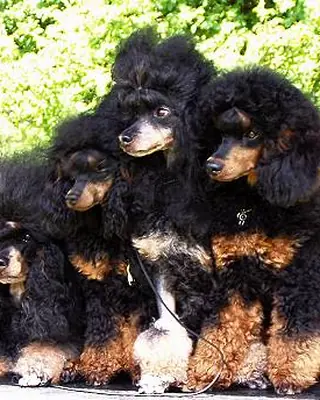
The word comes from the Poodle world, where a phantom is a dog with tan points on a solid body. The points sit where a Doberman's or Rottweiler's do. They can be rich rust, copper, apricot or cream, and they can be crisp or smudged.
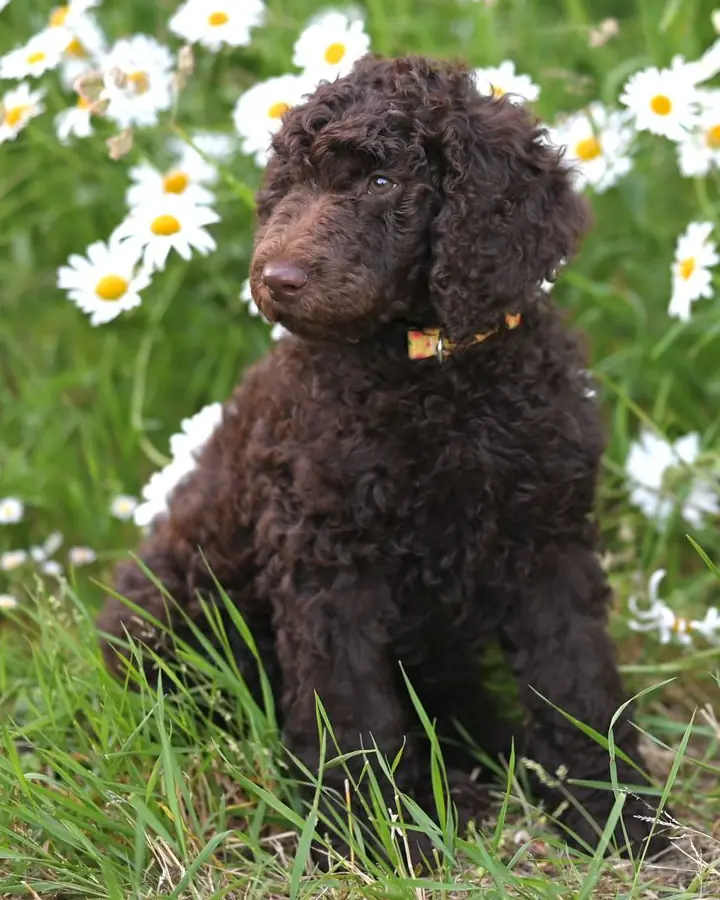
Phantoms come in black, chocolate and other base shades, so you will see black phantom, chocolate phantom and merle phantom used as names.
Think of the markings as five small zones: a dot over each eye, the cheeks and muzzle, the throat and chest, the lower legs and feet, and the area under the tail. A phantom may show all five clearly or only a couple. The darker the base, the more the tan stands out. On a chocolate base the points sit closer in shade to the body, so the pattern reads more softly than it does on black.
How does phantom coloring happen?
It is the same tan point pattern that gives a Bernese Mountain Dog its rust. Embark describes tan points as one variant at the A locus. Its guidance adds that the pattern only shows when the dog does not carry a dominant black gene, because that gene covers the A locus pattern entirely.
The Poodle side supplies the pattern too, since tan points occur in Poodles as well. This is why a phantom can come from either parent line. The page on Bernedoodle generations explains how F1, F1b and later crosses mix the traits.
Embark's explanation also covers hidden points. A dog with a dominant black gene can carry tan points without showing them, because that gene masks the A locus entirely. That is how two solid black parents can have a phantom puppy, and why a description of the parents may not match the litter. Only the DNA tells the full story.
What is the difference between phantom and tri-color?
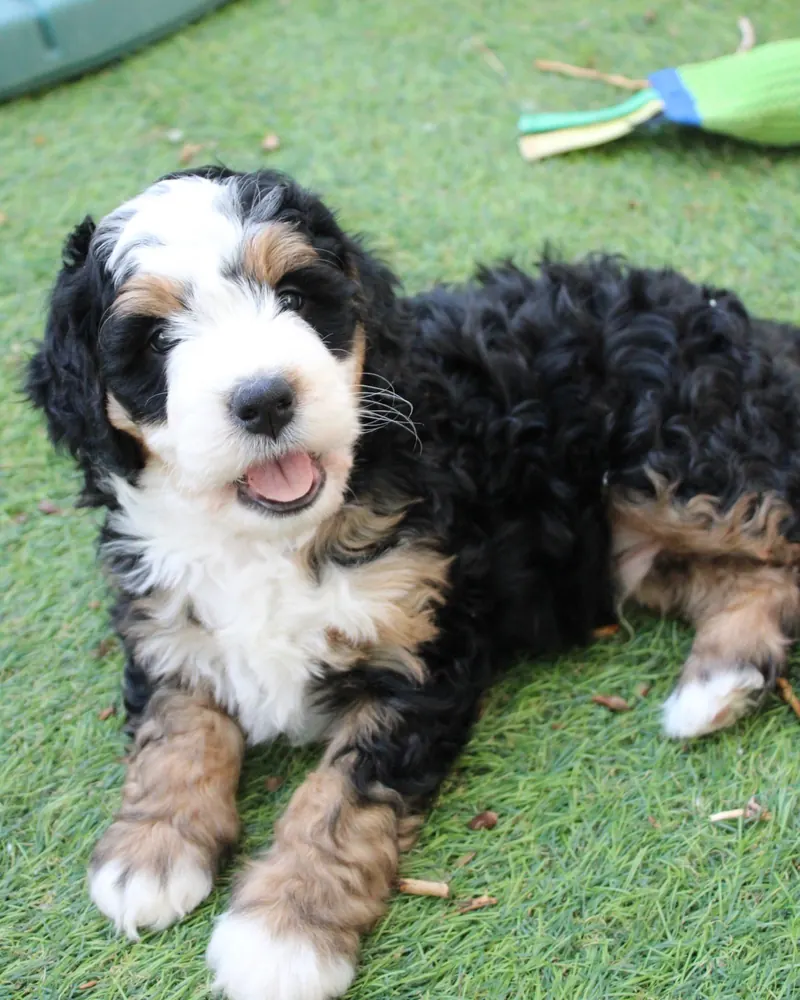
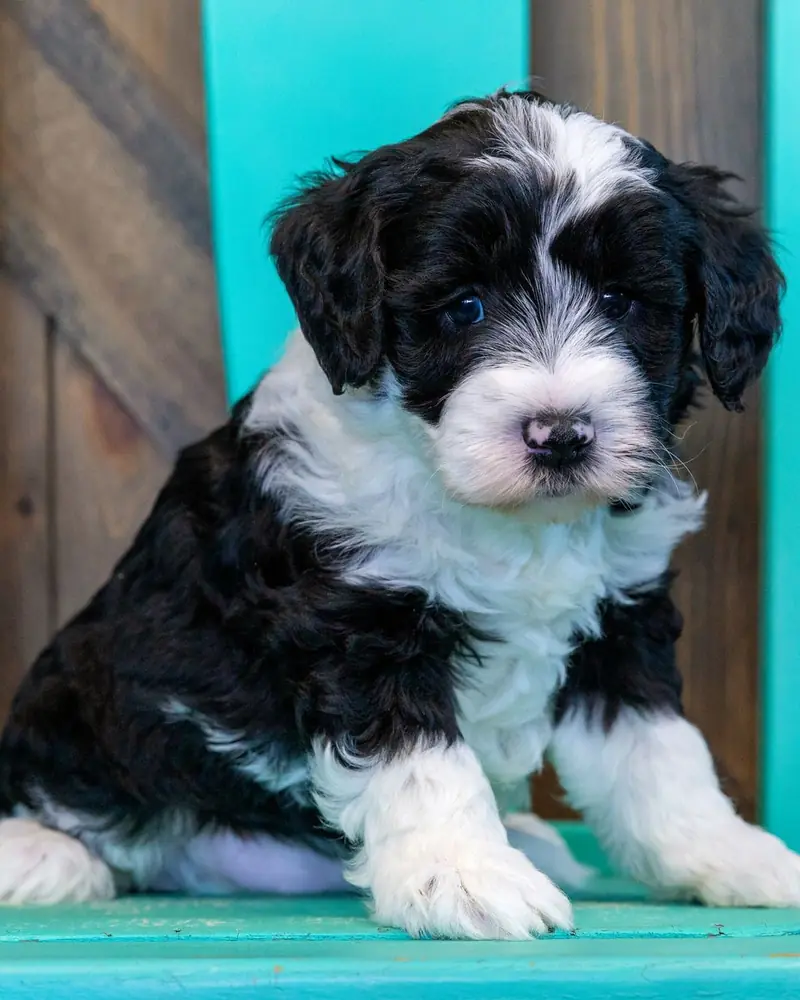
White. A tri-color has tan points and a good amount of white on the chest, paws or face. A phantom has little or none. The points are the same pattern, and the white spotting is a separate switch, so the two are really one pattern with and without that switch. A dog with a bit of white can be named either. Compare it on the tri-color page.
A useful test is the chest. A small white spot is common on a phantom and does not change the name. A clear white bib turns the dog into a tri-color in most people's eyes.
Do phantom Bernedoodles change color?
The tan points can change. Poodle breeders report that the points on a black or brown phantom can start deep red or apricot and lighten toward cream or silver as the dog matures. The base can also drift toward gray or silver.
The points tend to be easiest to read on a young puppy. They may be hard to see on an adult with a long, fluffy coat, and a short trim shows them best.
Points range from red and apricot to cream or white, which is why two phantoms from one family can age differently.
What is a phantom merle Bernedoodle?
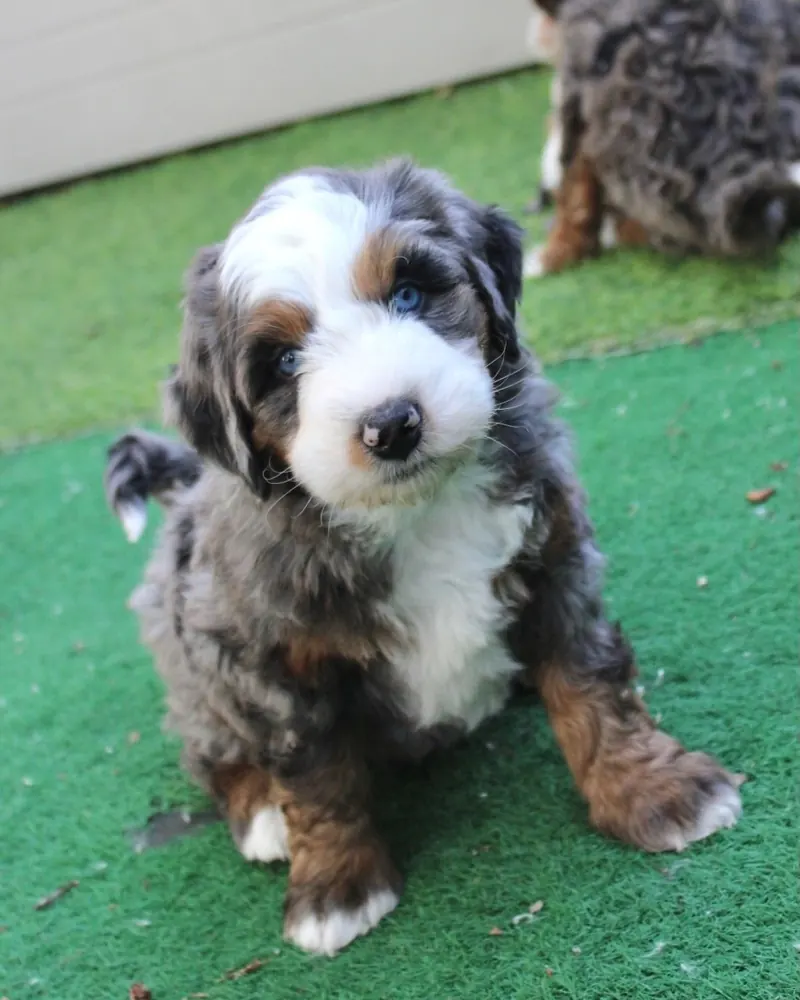
It is a dog with tan points that also carries merle. The mottled dilution shows on the dark areas, and the tan points stay tan. It follows the same rule as every merle: never merle to merle. Details are on the merle page.
A phantom merle needs a merle parent. Because merle can hide in a red or very pale dog, a DNA test is the sure way to confirm that a pairing does not put two merle carriers together.
Can a puppy be phantom and sable?
Both live on the same gene, with different variants. Embark ranks sable above tan points, so a dog with a copy of each is expected to look sable, though that ranking may not hold in every breed. The sable page explains the look.
A faded sable and a pale phantom can be mistaken for each other. Look for the zones: on a phantom the points stay in set places, while a sable's color blends across the whole body.
Does phantom affect health or temperament?
Nothing found ties tan points to health or to personality. Temperament comes from breeding, early handling and training. For a full rundown, see Bernedoodle temperament.
Heavy white has been linked with hearing loss in some breeds, and a phantom, with little white, sits outside that concern. Tan points themselves carry no known health cost.
If hearing and sight are the questions, ask about those directly and do not rely on color to answer them.
Where can you see phantom puppies?
The available puppies page from KK Doodles shows every current litter with photos.
Phantom Bernedoodle Questions
01What is a phantom Bernedoodle?
A Bernedoodle with a solid body color and tan points on the eyebrows, cheeks, chest and legs, usually with little white.
02Is phantom the same as tri-color?
They share the tan point pattern. Tri-color adds white markings, while phantom has little or none.
03Will a phantom puppy's markings fade?
They can. Tan points may lighten toward cream, and the base color can fade toward gray or silver. The amount differs from dog to dog.
04What is a phantom tricolor Bernedoodle?
A name used for a dog with tan points and some white. It sits between the two patterns.
05Can a phantom be a different base color?
Yes. Black, chocolate and blue merle bases all appear with tan points.
06Can two black Bernedoodles have a phantom puppy?
Yes. A dog with a dominant black gene can carry tan points without showing them, so two black parents can each pass on the points and produce a phantom.
The Other Bernedoodle Colors
Hoping for a Phantom Bernedoodle?
Tell us what you are looking for, and ask about the puppies available now.
Phantom poodles photo: Andrea Brendemühl, Wikimedia Commons, CC BY 3.0, cropped.
